Thursday, August 16, 2012

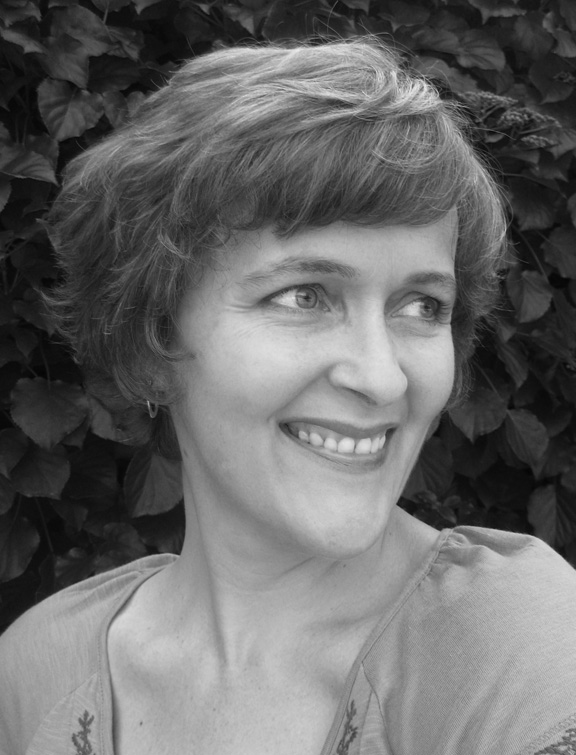
Interview with Sarah Campbell - Author and Photographer

   This week, I had the pleasure of interviewing Sarah Campbell, author, photographer, and creator of non fiction books for young readers. If you are thinking about registering or have already registered for the wik12 Conference (Writing and Illustrating for Kids), Sarah is one of our Regional Experts and will be leading two of the workshops! Check it out HERE.


   Sarah, please tell us about yourself and how you became a writer and photographer.

    I divide my time (not always equally) between creating children's books and taking care of my family. My husband Richard and I have three sons, ages 17, 15, and 14. Richard is also my creative partner for the picture books; he shares the photography credit and does most of the Photoshop work. We live in Jackson, Miss., which is not far from where I grew up (in a rural county in southwest Mississippi), but is a half a world away from the suburban London of Richard's youth. I grow a kitchen garden and do a lot of cooking (did I mention the teenagers?). I also love to sew. (Richard also has another job; he's a vice president and chief financial officer for Hope Credit Union and Hope Enterprise Corporation.)


       I've always wanted to write, and I always have. Thanks to my mother (who is also a photographer), I have a lovely black and white photograph of one of my very first stories, “The Eight Balls.” I wrote it in first grade, and it treats a theme I still grapple with today: figuring out how to follow the rules.

    In high school, I wrote articles about sports and other school activities for my hometown newspaper. I also learned to be a photographer. My mom taught me to shoot black and white film, develop it, and print the photographs. I also edited an oral history magazine called I Ain't Lyin'.
I put my photography on the back-burner in college. I was studying journalism and I got mixed messages from faculty about the wisdom of displaying to editors a skill for both photography and writing. At newspapers at the time, the duties were very clearly divided between photo departments and news departments. 


       After college and graduate school, I spent about five years writing for daily newspapers, covering everything from state government to ice storms to murder trials. I quit full-time journalism when my first son was born, but I knew I wanted to keep doing some kind of writing.
After I had two more sons within three years, I found it hard to do freelance journalism. At the same time, my reading habits had changed radically. Suddenly, I was immersed in the world of children's books. I decided I'd like to try my hand at writing for kids. I started by writing an article for Highlights and then moved on to books. My first was Wolfsnail: A Backyard Predator (Boyds Mills Press, 2008). 

       When I began writing for the children's market, I studied the photo credits in magazines I was interested in publishing in and noticed that at least some of the time, the writers provided the photographs. My chief concern was being able to provide photographs at the quality necessary for printing.

       My first digital camera was a point-and-shoot and, though processing was fun and easy, I felt handicapped in my shooting. I invested in a digital single lens reflex (what I call a “real” camera) and I have never looked back.


     All of this was happening around the time I was trying to sell a story about wolfsnails. The images that accompanied the article I sold to Highlights were taken with my digital point-and-shoot, but I knew I wanted to illustrate my picture book manuscript with a totally different kind of photograph. I bought a macro lens to fit my camera and began taking up close, larger-than-life photographs of the wolfsnails. I brought a set of them to a Southern Breeze SCBWI conference and had them critiqued by an art director. When he told me they met the quality requirements, I gained the confidence to pair my manuscript with my own photos. 

  
   Your most recent book, Growing Patterns: Fibonacci Numbers in Nature, shows some of the amazing math and science in nature all around us. Share with us how you developed the idea for this book? 


    Like many people I had heard about the Fibonacci sequence in various contexts, but I got really interested after reading about the connection between the Fibonacci sequence and nature. When I showed an art director an advance copy of
Wolfsnail: A Backyard Predator during a portfolio critique, she asked what I'd like to do next. I told her I'd love to do something that would examine patterns in nature. She agreed it would be interesting and the idea really clicked for me. I did a quick bit of market research, got my hands on some books about the Fibonacci sequence, and then wrote a proposal for my editor at Boyds Mills Press, Andy Boyles. The final concept didn't come for more than a year (neither did a contract for publication). I had taken a bunch of the photographs and made a few attempts at the story when I started working in earnest on the design. The final concept came to me as I played around with a storyboard. The visual narrative builds in the same way as the Fibonacci sequence. For me, it is a great example of the way a picture book works. The words and pictures have to work together. Neither is sufficient alone.


   In addition to your first book, Wolfsnail: A Backyard Predator, and Growing Patterns: Fibonacci Numbers in Nature, your writing and photography has also been featured in numerous publications including The New York Magazine, Highlight’s Magazine, and Highlight’s High Five. Do you have an agent and what was your road to publication like?
   

    I do not have an agent. 

   My road to publication took about six years. When I first began trying to write for the children's market, everything seemed alien and overwhelming. The best thing I did was to join the Society of Children's Book Writers and Illustrators and start attending Southern Breeze regional conferences.
I sent a bunch of stories to various magazines and publishers – especially those whose editors I met at Southern Breeze conferences. All were rejected, with the occasional personal note.


       When my son found wolfsnails in our backyard, I knew I had a marketable idea. First, I sold a story and photographs to Highlights. As we were going through the final edits for the article, I mentioned to my editor, Andy Boyles, that I had written a picture book manuscript. He asked me to send it to him; he had just become an editor at Boyds Mills Press, too. Andy was the only editor to see it.

       I went to him again when I got the idea for Growing Patterns: Fibonacci Numbers in Nature.
I feel as if I have had a very charmed career in children's publishing. Wolfsnail and Growing Patterns have been very well received. I am working on two more projects. I want to keep doing this as long as I can.


   I saw on your website that you also teach photography to children. What are your classes like and how do your youngest students respond to photography and taking their own pictures?

    Most of my current teaching is short residencies in elementary schools that combine the teaching of photography and writing. I typically partner with elementary school teachers to teach a project-based unit. I've worked with second graders to photograph their school neighborhood; third graders to write and illustrate math stories with photographs; fourth graders to document flora and fauna in an urban art garden; and students in grades three through six to write, photograph, and illustrate Fibonacci Folding books. (You can find out more about these projects on my BLOG. Click on the Arts Integration – Photography category.)

       Typically, I work with students in small groups (4 to 6) to take photographs and to write captions or other informational text to accompany the photographs. Students love taking photographs. Having the creative freedom to capture their own images seems to help students tackle their writing with more enthusiasm and genuine interest.


   What tips do you have for other budding photographers who wish to illustrate books for children? 

    First, study the market. Read photo credit information to determine the sources for photographs in books or magazines you admire. Pay particular attention to the publishers of books and magazines who use original photographs (by this I mean non-stock photographs).
    Also, work on your craft. There are lots of great tutorials online, and you can also sign up for weekly challenges that prompt you to stretch your photography muscles.


   You create beautiful non fiction books for children. Have you considered using your photography to illustrate fiction?


    I have thought about it; I've talked about it. I haven't figured out how to do it. I know there is a market for photographs as covers for MG and YA fiction, but I haven't sent any samples out or pursued it in any serious way. I'd love to see it done.


   What are you working on now? 

    I am working on two projects. One is a picture book that would illustrate a math concept with photographs (similar to Growing Patterns). I hope to have good news about this project soon. The other is a chapter book and my first foray into fiction. It tells the story of a second grader who moves from a northern city to a small Mississippi town in the early 70s and becomes the only white student at her school. 

   Please list your website, blog, twitter, facebook page and any other places that we can learn more about you.

    Richard and I are in the middle of a wholesale overhaul of the website, which includes a new name and look for the blog. We hope to have it ready by opening day of the Writing and Illustrating for Kids Conference 2012.

website: www.sarahccampbell.com
blog: www.sarahccampbell.com/Blog
twitter: @campsarah
Facebook: Sarah C. Campbell, Growing Patterns: Fibonacci Numbers in Nature
You can also find me on Pinterest.


Meet more of the wik12 faculty by following their blog tour!
 
Aug. 15 Sharon Pegram at Writers and Wannabes

Aug. 16 Sarah Campbell at Alison Hertz’s blog, On My Mind

Aug. 17 F.T. Bradley at Laura Golden’s blog

Aug. 20 Chuck Galey at Elizabeth Dulemba’s blog

Aug. 21 Jo Kittinger at Bonnie Herold’s blog, Tenacious Teller of Tales

Aug. 22 Irene Latham at Robyn Hood Black’s blog, Read, Write, Howl

Aug. 23 Vicky Alvear Shecter at S.R. Johannes’ blog

Aug. 24 Doraine Bennett at Cathy Hall’s blog

Aug. 27 Virginia Butler at Bonnie Herold’s blog, Tenacious Teller of Tales

Aug. 28 Jodi Wheeler-Toppen at Diane Sherrouse’s blog, The Reading Road

Aug. 29 Ellen Ruffin at Sarah Frances Hardy’s blog, Picture This

Aug. 30 Donna Jo Napoli at Writers and Wannabes


Now - Go Register for wik12! Click Here.

Wednesday, July 18, 2012

Where's Wednesday?

Wednesday arrived before I could blink. School's out and that means that kids are home. Time at the computer = zero, zilch, nada, nothing. I apologize if you clicked on my blog hoping to see another Author/Illustrator Featured this Week but since they, too, are dealing with summer craziness, this week was left as a black hole in my Wednesday line up. I meant to post about my own journey to publication which has had many bumps and hitches but was unable to get to the computer long enough to do that. Summer craziness has stolen this day, week, month. I do hope you will return for the future line-up of Wednesday Features on amazingly talented Author/Illustrators Diandra Mae, Priscilla Burris, and Charlie Eve Ryan. I will also be posting a "What I learned this summer..." about how Will Terry videos as well as other illustrator mentors have changed my approach to my own illustrations.

Check back next Wednesday to see which of the above Author/Illustrators will be featured.

Wednesday, July 11, 2012

Author/Illustrator - Andi Osiek


Andi Osiek
        (Pronounced “ON-DEE”… as opposed to Andy. It’s short for Andrea.)
How long have you been creating art for children?

I have been creating art for as long as I can remember. My mom actually has a book I made in Kindergarten about wanting to be an animator for Disney “when I grew up”. I held onto that dream for a long time, received a degree in Illustration, and eventually decided that my real passion is in children’s literature. I’m looking forward to seeing where this new direction will lead me.


How long have you been writing for children?

I imagine I’ve always had stories living inside me, ready to be told. I’ve spent the past 10 years working as a graphic designer and writing (boring) copy for adults. After attending a handful of SCBWI conferences, I kept being encouraged by other writer/illustrators to give it a try. I signed up for the 12x12x12 in January and now have a few manuscripts that I am working with. It’s all a learning process but I’m hopeful that by this fall I will have a dummy or two to start sending out. At the very least, it’s been a fun experience.


Can you share a bit about your publishing journey?

For a number of years I have been working in graphic and web design to pay the bills. Three short years ago, my son was born and I was blessed with the opportunity to leave my 9-5 and stay home with him. I have been doing freelance design work since then, but I’m gradually phasing that out as I focus on my true passions… illustration… and now writing. I consider myself a geek AND an artist, so I am really interested in app development too. Technology and art will continue to intertwine in the future. I’m hopeful that my past experience will lead me toward some interesting opportunities over the next few years.


Where do you do your artwork? Would you describe your space?

I have a nice, organized studio space that I use for most of my computer and digital illustration work. My son and I can often be found at the kitchen table covered in marker smudges and paint. I spend more time than I should in my hammock “thinking”. However, if I’m under a REALLY tight deadline I’m not ashamed to pack up my laptop, Wacom, and a few art supplies and head to a café with free Wi-Fi and iced tea refills.


Please tell us about your illustrations. Can you describe your creative process for us? How would you describe your style?

Like most artists, my “style” is continually evolving. In the past I worked a lot in colored pencil, but the medium is very tedious and difficult to make adjustments to. About 6 months ago I began working in digital format with a Wacom and I fell in love. I’ve found that I can get better texture, control and layering capabilities than I had working in pencil. It’s also faster and MUCH easier to edit. My eyes have really opened to a new way of working… one that I had turned my nose up to for a long time.

Generally my process starts with an idea. These ideas often come from something as simple as a word (I’m a huge fan of IllustrationFriday.com prompts). From there I research, sketch, draw everything out in colored pencil, and scan it. Then comes the slow process of layering color. I tend to work in a very controlled way, so I have challenged myself to experiment a lot more lately. I find that “happy accidents” often breathe life into my work. I am trying to allow myself to make more of them… something which has always been difficult for me.


Which comes first - the story or the illustrations?

I would have to say that my work generally starts with character. Sometimes I will know their story before I get started. However, I usually get to know them even better while I sketch. I answer silly questions about them… What do they eat for breakfast? What was their favorite vacation? Who is their biggest hero? These questions help me to understand how they will react in certain situations. Sometimes it will even add a subplot to the story or image that I never would have thought of otherwise.


Andi can be found at:

Website: http://www.andiosiek.com/
Blog: http://www.andiosiek.com/blog
Twitter:
@AndiOsiek
Facebook Fan page: Andi Osiek Illustration


Anything else you would like to add about your art, your writing, or your road to publication?

I would say that the best advice I have been given is to embrace relationships and connections with others in the field. I joined SCBWI several years ago and attend every conference I can. I’m not afraid to ask questions, I try to share what I’ve learned with others, and I treasure the friendships I have made along the way. I now have many friends (in person and online) who I can turn to for advice, support and encouragement. Plus, it’s pretty darn cool when I see a friend’s book in the bookstore or library. I celebrate along with them and look forward to a time when they can do the same with me.


Please leave comments and questions for Andi below.

Come back each Wednesday to see and learn about the
Author/Illustrator of the Week.

Thursday, July 5, 2012

Tons of Trucks Release & Giveaway!


Don't forget to enter the Tons of Trucks by Sue Fliess Giveaway!

Congratulations on your new book! How long have you been writing for children?
I think I started around 2005. I say I think, because it was sometime that year, but I had an infant and a toddler, and wasn’t getting any sleep, so it’s really anybody’s guess! I’ve been writing all my life, but only had the idea to write for children once I’d had one of my own! I started thinking about writing for children – picture books in particular – in 2003, when my son was an infant and I was reading every picture book and board book out there. I wrote a couple of messy attempts at picture books, but didn’t get serious about it for awhile. I have a good excuse for waiting. I had my second son in 2004!  

Can you share a bit about your journey to publication?
I wrote a terrible draft of a picture book about outer space, and just as I’d ‘perfected’ it, I heard about a class about writing for children at a local college. I signed up, attended, and left with an arsenal of information and a good dose of reality. I joined SCBWI and truly believe it is that organization that helped me get published. I attended conferences, met editors, writers, and published authors. I joined a critique group and wrote, wrote, wrote. Then I submitted my work—over and over. Finally, in early 2009, amidst all the rejections, someone said yes!

 Where do you like to write? Would you describe your space?
Funny you should ask that! For Mother’s Day this year, my husband said I needed a proper office. I should explain that I also work almost full-time as a writer for eBay, and writing at the dining room table was getting old—not to mention I had to hastily pack up my ‘office’ every time we had dinner guests. My desk for my children’s writing was inconveniently in the back of the house (in our guest room), but was not a big enough space to do both eBay and my personal writing. I was scattered and feeling disorganized. When I sold several manuscripts this year, my husband said enough is enough. So, we converted our dining room into an office for me. I’m ecstatic!  I still have some boxes to put away (so forgive the piles), and nothing on the walls yet, but here is a photo.


Would you share a before and after of some of your writing? I mean a few lines before it was ready for publication?

Here is the ‘old’ first stanza to Shoes for Me! and what finally got published.

Shoes for Me! once started like this:

Baby shoes are

All too small.

Off we go. Off to the mall!


And became:


Feet got bigger,

Heel to toe.

Time for new shoes. Off we go!


Sue’s books can be purchased here:
Click HERE to see the trailer for Tons of Trucks!

Sue can be found at:

Website: www.suefliess.com
Twitter: @SueFliess
Facebook Fan page: Sue Fliess Author


Anything else you would like to add about your art, your writing, or your road to publication?

I encourage writers to apply for grants. I applied two years in a row for the SCBWI Barbara Karlin Grant for picture book writing, and one year for a work in progress grant for a young adult novel I’d written. I received a Letter of Commendation for both Barbara Karlin grants – one for Shoes for Me! and one for Tons of Trucks. These grants are often judged by editors and other people of influence in the industry. It gets you and your work out there and lets people know you are serious about your craft. And, you could win!

and now for the GIVEAWAY!
TONS OF TRUCKS - HOT OFF THE PRESS!


a Rafflecopter giveaway

Wednesday, June 27, 2012

Author/Illustrator - Julie Rowan-Zoch


 How long have you been creating art for children?

I don’t know if I ever thought of myself creating art specifically for children. I don’t see illustrating picture books as just for kids. But I hope my illustrations will inspire kids to create, and always have!


How long have you been writing for children?

I have worked as a graphic designer, but I have thought about making picture books for a long time, and began to scribble in earnest in 2011.


Can you share a bit about your publishing journey?

ASAP!


Where do you do your artwork? 

Wait, let me shoo the dust-bunnies first! Ahh, good thing for me you asked: just found a missing sock as the d-b’s scurried under the sofa! I don’t have a studio space in our small home, but here is where I do most of my artwork on paper. Otherwise I use the computer for digital work.


Please tell us about your illustrations. Can you describe your creative process for us? How would you describe your style?

I am not sure I have a style! I suppose a friend could identify my work, so maybe I do! I’m a graphic designer, and a lot of my work is what one might call graphic, but my pencil drawings are not ‘graphic’ to me! (Although I recently attempted some abstract landscape sketching on a weekend in Rocky Mountain Nat’l. Park:


I’ve heard that’s what publishers want: one illustrator, one style. But just as an editor will look for a match, I need to be able to feel that the style of illustrations are right for what I write – and as of yet that can be quite varied! I have been writing an awful lot since the 12x12 challenge started, over 35 ms drafts, not including pockets full of idea-Schnipsel (German for scraps of paper). If I felt I was not able to illustrate one of my stories well, I certainly would be open to pass it on to another illustrator!


Recently I sent this competition entry in to my local SCBWI chapter for the Fall Conference poster. The theme is The Future is Now:Surviving and Thriving in Today's Children's Book Market. Even with this kind of thing I look for words to give me inspiration. I browse the dictionary, the thesaurus, look for idioms or quotes. Sooner or later, there is a spark and I run with it. In this case I remembered a word I had illustrated for illustrationfriday.com: heights. The girl’s eyes had what I wanted to convey: http://julierowanzoch.wordpress.com/2012/04/20/illustrator-friday-heights/. I actually like the energy from the sketch better! I completed the final using markers as a first layer, then colored pencil and graphite pencil for contrast/depth.


Which comes first - the story or the illustrations?

I don’t think I can separate that. I think, I see visuals of characters in my head, they talk and I get to know their story as well as their appearance. I might begin to write down their story, or begin with the drawings, but they were born at the same time. As I participated in NaPiBoWriWee I thought I’d try a different approach: with no preparation I sat before a blank word file (except for #7, the idea appeared in my head months ago!). I shook my brain cells and let a story ‘happen’. Each draft is quite different from the rest. Let’s see if I can better relate with my thoughts: “Day One, page one...one.....one is the loneliest number.....“ And that is how the story began! Okay, so that was easy, AND I really like what came out, but I saw all that happen in my head. So you tell me – what came first?


Julie can be found at:


Please leave comments and questions for
Julie Rowan-Zoch
in the comment section below.

Come back every Wednesday all summer to see the
Featured Author/Illustrator of the Week!

Wednesday, June 20, 2012

Author/Illustrator - Helga Pearson


How long have you been creating art for children?
It really depends on what you call 'art' but I've been a creative little monkey since the very beginning. This picture of me at 4 yrs old, shows one of my more spontaneous body-art creations.

My younger self (the one of the left) was thinking, how fabulous would it be to use charcoal and cover my entire body from head to toe? Not satisfied with just this, I then enlisted the boy from next door as my next subject and proceeded to the paint him in charcoal. Ah, the hubris of the young creative mind.! My mother thought this was hilarious, which is why this photo exists, the boys mother was however not so easily amused. Not even when I explained to her that we were meant to be soldiers seeking our fortune, or a fight, whichever came first.
I only started taking drawing seriously when I put aside my wildling ways, picked the leaves and twigs out of my hair and donned a uniform to go to school. When I was a bit older, my father came home one day with nibs and ink and for ages I became obsessed with ink pen illustrations as well as lithographs. I never quite got the hang of colour, not until much later and not for want of trying, believe me! Without any formal training, I tried every pigmented art medium I could lay my hands on but the results were always  disappointing. I eventually stumbled upon oil pastels and finally found a medium I could connect with.

How long have you been writing for children?
Not long at all! *laugh. It wasn't until I signed up to the 12x12 challenge that I even thought about writing as well as illustrating children's books. I'm 34 now and if I'm honest, I'm only at the very beginning of my journey. I keep reminding myself though that Julia Child only started cooking when she was 37 - anything is possible!

Can you share a bit about your publishing journey?
I spent most of my twenties working in the advertising business. I started out designing leaflets for a national supermarket chain. I soon realised however that art and leaflet advertising are very different things. When it came to placing hundreds of products and accurately pricing them, my ability to focus was zero. I moved on to help out in the market research and strategic planning departments, which was a lot more interesting. I learnt a great deal working in advertising, specifically how to use design programmes like Photoshop and Freehand which has really come in handy over the years.
After I left advertising I tried a few different things but the one I loved most was being a bookseller. I'm a bibliophile of epic proportions, so working in a book store and sharing my passion with others was a perfect fit for me. I had also been producing fine art pieces with oil pastel in my spare time but although I adored illustration, I really didn't believe I was able to produce them myself. The trouble was, I had convinced myself that all illustration came from the imagination and try as I might, I couldn't produce work straight out of my head. Once I discovered the truth however, that most illustrators use a great deal of reference pieces for their work, it all kind of fell into place. I'm still learning everyday but at least now I feel like this is something within my ability to do.

After I had my son, I stopped working full-time and signed up for a illustration course with Mark Mitchell. He has been such a inspiration as a professional illustrator and invaluable as a guide and teacher. I recommend that anyone starting out with a desire to illustrate sign up for one of his courses. It was through the people I met on this course that I was inspired to buy a digital Wacom tablet, now a lot of my illustration work is done digitally.

Where do you do your artwork? Would you describe your space?
I have a small studio... ok, it's our spare room and laundry corner, but let's not quibble. Would you like to  see it with our without the overflowing ironing baskets?

Please tell us about your illustrations. Can you describe your creative process for us? How would you describe your style?
My process seems to be refining itself more and more with every passing day. I start out with thumbnail sketches for the entire story and then tackle each thumbnail individually and flesh it out. First off, I'll look for as much reference as possible for the elements I've included in my thumbnail and from this, I might do a few character sketches and then start drawing out the full-sized compositional sketch. Lately, I've been doing a lot of my drawing with my digital tablet, as well as my colour work. I'm not sure if this will always be the case, I sometimes miss the tactile yumminess of working with oil pastel and paper.

This composition comes from the picture book dummy I'm currently working on, called 'Goodbye Mom'. After writing the story I got down to quickly scribbling thumbnails for every page, these are just a few of them.


I then focused on 'Tea with the Lion' two-page layout and started looking for reference that might help me draw this.

Using these reference images, I drew up a few Character and Reference Sketches.


I start putting together the final composition sketch that shows the placement and look of everything I want in the final illustration


Once the final sketch is done I decide on the palette or colours I want to use in the final piece. I did this by referring to finished pieces I had already done for the book and making sure the colours I used didn't stray to far from these for continuity purposes.

My first attempt at a digital colour composition for this layout was somewhat disastrous but I learnt a great  deal from it. I'd just gotten my digital tablet and was still in the process of finding my feet. I tried again after making a few adjustments, I feel the second attempt is actually stronger because of all the mistakes I made initially. (6.First Attempt 7.Finished Work)


Which comes first the story of the illustrations/sculptures?
For me, the story has always come first. I adore anything that tells a story, a picture, an object, a song – it's the essence of everything for me. Perhaps it's why I love illustration above any other form of art because it's sole purpose for being, is the story. How cool is that? Methinks pretty cool.

Helga can be found at:
Twitter: @helgapearson

Please leave comments and questions for
Helga Pearson 
in the comment section below.

Come back every Wednesday all summer to see the
Featured Author/Illustrator of the Week!

Saturday, June 16, 2012

New Picture Book - One Day I Went Rambling

Terri Murphy, illustrator for One Day I Went Rambling, stopped by my blog and answered a few questions about illustrating and publishing a picture book for a traditional press (Bright Sky Press).


Terri is the SCBWI-IL Illustrators Network Coordinator and one of the first professional illustrators that I met in the writing and illustrating for children world.

Her latest book, One Day I Went Rambling (see below) is about a little boy who sees the creative potential of everyday odds and ends he finds. His friends don't see it but slowly they come around and join in the fun.


Terri,congratulations on your new book release. Can you tell us a little about the process of how this book came to be? 

Thank you, Alison. I was lucky to have illustrated a picture book with Kelly Bennett previously with the same publisher, Bright Sky Press, so when they acquired the One Day I Went Rambling manuscript, Kelly requested me as the illustrator. Happily history repeated itself.

Did you get to meet or speak with the author during the illustrating process? 

Although Kelly and I know each other and have met before, we don't communicate during the illustrative process. It's not that I'm opposed to it, but there is a certain implied trust if you allow an illustrator to have free reign. If I had a question or was unclear about what she was trying to communicate, I would call her, but such was not the case. The publisher did show the sketches to Kelly before I went to finished art, and in addition to ooohs and aaahs, she suggested I include Zane's mascot, a color-changing chameleon, on every page in a hide-and-seek way. I had the chameleon on most pages, but all pages was definitely a good call!

How much time did you spend on the illustrations from sketches to final? Can you explain a little about the back and forth process of the book coming together? Were you given illustrator notes at the beginning or did you have more freedom to create?

I was given one illustration note, a suggestion really, that the "smooth brown vest" Zane finds could be a grocery sack. And so it was! It took about 5 months to complete, from receiving the manuscript, to creating sketches, to final art sent to the publisher. The interesting thing about working out a visual story line is that ideas come throughout the process. Everything is not clear-cut in my mind from the beginning, but more of an ebb and flow of possibilities. Whenever I go on school visits, I tell children the two most powerful words in creating something is "what if." Some of the "what ifs" I went with are "What If I hand-letter all of Zane's imaginative pronouncements and use them as a design element? What if I give him a mascot? What if I box all the friends' unimaginative reactions to his treasures and drain the color?"

Here is a look at a sketch and color illustration from One Day I Went Rambling.
Thanks for sharing these, Terri!


Now that we have heard a bit about your exciting new book, can you share a bit about your other books?

I've illustrated several books, but the one I mentioned above authored by Kelly Bennett, "Dance, Y'all, Dance," is a peek into a yesteryear romp-and-stomp dance hall that twirls the reader through several country dance steps and family-fun situations.  Kelly writes about themes that resonate with me as an illustrator, and I await to see if that muse strikes a third book in our future!

Thank you for taking the time to stop by my blog and share a little about the process of illustrating and publishing a picture book.

Head on over to her BLOG to enter to win a signed original illustration of the chameleon from the dedication page, a color changing cameleon, or a signed copy of the book!

Terri Murphy can also be found at her website www.terrimurphyart.com 
Twitter:  twitter.com/terrimurphy5
FacebookFan page

Wednesday, June 13, 2012

Author/Illustrator - Jennifer Thermes


How long have you been creating art for children?

Professionally, for almost 19 years, but I've been drawing since I was a little kid.


How long have you been writing for children?
As with the art, I've been writing in one form or another my whole life. (There are many angsty pre-teen journals in my cupboard!) I started writing seriously for children after my illustration work started to take off, at the suggestion of an editor who was interested in my work.


Can you share a bit about your publishing journey?

I began my illustration career by creating illustrated maps for various publications. My first book came about through an editor who admired my map art, and suggested I try writing stories. We went back and forth for about a year on an idea that was ultimately rejected, but in the meantime I'd also been working on a book about a very old house and the changes it had seen over time. That became my first book, When I Was Built.


Where do you do your artwork? Would you describe your space?

I have a studio at home. (I love calling it a "studio!") In reality it's a small room crammed full of two drawing tables (one for standing and one for sitting), my computer, bookshelves– with sketches, art, and random inspiring stuff taped to the walls. Usually there's a cat (or two) and the dog hanging around, as well. I'm a big fan of cozy clutter.

Here's a picture of some of the final art for my most recent book, Maggie & Oliver, or A Bone of One's Own, hanging in my studio. It took up most of the wall space. (Don't judge the mess on the flat file!):


And here's the book!:

Please tell us about your illustrations. Can you describe your creative process for us? How would you describe your style?
I work in pencil and watercolor, and pen & ink with watercolor for my maps. For illustrations, I try to picture the overall look in my head, while making lots of thumbnail drawings. Thumbnails are one of my favorite stages of a project, because there are so many puzzles to work out, and so many possibilities. Once the ideas have been narrowed down it's a matter of enlarging the sketches and refining them, and then doing the final art. I'm not sure how to describe my own work… I'm probably too close to it to have perspective!

Here's the beginning of a sketch. My thumbnails are usually much messier!
Final sketch:

Transferred to watercolor paper, with the first layer of pencil:


And beginning to lay in the color here:


And the final piece:


I did a series about creating this piece on my blog, if you'd like to read about it in more depth:


Which comes first the story of the illustrations/sculptures?
It depends on the idea. For me, stories arrive in all different ways– from a doodle, a phrase, or a word, or an image that pop into my head. After the initial inspiration comes the work of figuring out what the story is actually about. I like to bounce back and forth between the words and the pictures as the story takes shape.


 Jennifer can be found at:
Twitter: @jenthermes

Anything else you would like to add about your art, your writing, or your road to publication?

I'd just say– find the thing that brings you joy about writing or drawing, and treasure it. Have fun with your art. Take pleasure in the process!

Please leave comments and questions for
Jennifer Thermes
in the comment section below.

Come back every Wednesday all summer to see the
Featured Author/Illustrator of the Week!

Wednesday, June 6, 2012

Author/Illustrator - Cynthia Iannaccone


What where your early years like?

As a child I carried around a picture book, ready to hand it over to any available adult to read out loud. During story time, I remember sitting on the floor looking up at our librarian, mesmerized by her voice, the way she held the book, showed the pictures, and turned the pages.


My mother complained I was reading too many horse stories and not enough classics like Little Women. Well, at least I was reading and my teacher agreed.


Once I took a book from my parent's collection and secretly read Thunderhead by Mary O'Hara. It had very few horse pictures, but enough to grab my interest.


When I opened my father's books I couldn't understand why he would want to read a book with not one picture, just solid blocks of tiny type.

I guess I was a visual learner. I worked with clay and drew all the time.


What kind of writing and illustrating do you like to do?

I write and illustrate picture books, and poetry.


Do you have any published work?

Two electronic picture books, I Am Me and An Elephant Named Fiesta and I recently collaborated with eight other illustrators. We illustrated an old Mexican folktale for an educational publisher.


How did you get started in writing and illustrating?

I was accepted into the medical illustration program at collage but my advisor thought I'd be happier in a more creative field. He suggested I go into children's book illustration. I'm so glad I listened to him.


Can you describe your creative process?

The story idea comes first. Sketches help to push it further. I bounce back and forth between words and pictures, then complete the final art in gouache on arches hot press. Sometimes I work with other mediums.


My first portfolio was done with Photoshop, but I didn't like the process. I still use Photoshop to resize, etc. but paint traditionally and exhibit.


Where do you create your art work?

I use the living and dining rooms as studio space. The entire house is actually studio space shared with my husband who is also an artist and our five pets; two cats and three dogs.


Cynthia Iannaccone can be found:

Illustration website: www.cynthiaillustrate.blogspot.com


Twitter @cynthiai 

Facebook

If you have questions or comments for Cynthia Iannaccone, please leave them below.

Come back next Wednesday (and every Wednesday all summer long) to see my Featured Author/Illustrator of the week.