Friday, April 20, 2012

April Fool Phyllis's World Tour


April Fool Phyllis, a fabulous new picture book by author Susanna Leonard Hill, came out last month. In February, Susanna lined up a fantastic group of children's books authors and illustrators and sent Phyllis on a worldwide blog tour. This little groundhog gets to travel to various countries and to many states within the United States. While visiting each location, she learns about the local weather, meets children, sees local sites and shares her story. I feel very lucky to have been included in this event. Here is our story of her visit...

A package arrived on my doorstep on Tuesday evening. I anxiously opened the envelope and when I saw that it was April Fool Phyllis, I quickly took her out to get some fresh air. I welcomed her to Georgia and showed her the forest behind my home. She like it a lot. She wanted to meet the gopher who lives in the hole in my yard but I took her into the house to meet the family instead. My daughter read Phyllis’s story about April Fool’s Day before bed and I tucked Phyllis in for the night.


Wednesday morning, my four year old told me that Phyllis looked tired from her travels and asked if we could take her with us for a Spa Day. Phyllis rode with us to the salon. See photo. Erin got a haircut and Phyllis had a shampoo and blow dry to fluff up her fur.


Then Phyllis, Erin, and I went to Panera for a girl’s lunch. She was curious about Chik-fil-a but I told her that it probably wasn’t a good idea for a groundhog to eat chicken. Phyllis opted for a salad at Panera.


After lunch, we took Phyllis up to the top of a very, very high street in Marietta, Georgia so she could see the Atlanta skyline. Phyllis told us that she had never been soo high up. Erin held her really high to see the skyline (on the horizon in the distance).


The weather in Georgia was a sunny 82 degrees. Phyllis predicted that it would stay sunny for another whole week and then it would get a little drizzle of rain. She was right. Erin read Phyllis’s story again before bed and read another story to Phyllis about princesses. I tucked Phyllis and Erin in together for the night.


Thursday morning, Erin carefully put Phyllis in an envelope and we mailed her off to picture book author, Corey Rosen Schwartz for her next visit. She left Georgia pampered, rested, and refreshed. Phyllis was ready to visit more families in other states and countries.

If you would like to learn more about April Fool Phyllis, check out author Susanna Leonard Hill's website or blog. This book, full of adventure, suspense, and puzzles, would be a great addition to any child's bookshelf. I highly recommend this book as a read aloud. Click HERE to watch the book trailer.

Tuesday, March 20, 2012

Sunday, March 18, 2012

A Lion in the Storm

This blog is called On My Mind. Today's post is not the usual story starter or writing tip. This was written while trying to grasp what happened that day. It has meaning beyond meaning to me.


The rain began slowly at first, falling gently in the morning.  I carried you both on our journey home. I held you close, as close as possible, and kept you dry.  I let you know how much I loved you and promised that I would keep you safe.  As the day progressed, the rain got heavier and everything changed.  The wind blew stronger and stronger until it became difficult to carry you but I would not let you down.  She thought she was ready to go or maybe it was something else compelling her to go but it wasn’t my idea.  I could see our blurry house in the distance but the storm was too heavy to get there.  I ran into the nearest building.  We huddled to stay warm.  The wind whistled as the storm shook the walls and the door opened, just a little at first, but continued to swing wider as the rain and wind steadily increased.  Holding on to you as tightly as I could, I tried to force the door closed but the wind picked up. It forced the door open and slammed me against the wall.  The air swelled into a hurricane and its pull ripped us apart.  I lost control of keeping you safe.  I was forced to let go.  The winds carried her, my baby girl, through the doorway.  I grabbed for her but she was swept too quickly out of reach.  We had to let her go but you weren’t ready.  You wrapped yourself around me.  I begged Mother Nature to let you stay.  You held on but the grip of the wind was too tight.  It wrapped us like a tornado, twisting, turning, and separating us. It refused to let you go.  The torrential downpour whipped across my face as it tore you from me.  I wasn’t ready.  You were too small to survive alone, but you found her, your sister, and stayed together.  You both struggled to live without me.  When the weather calmed, I found you battered and bruised.  I sat beside you both and held your hands.  I looked into your eyes and spoke softly. Your sister left us first but you continued to hang on.  Then you left us.  It was too soon.  You left me too soon.  Our dreams were shattered.  That day is here again and I can’t shake the memory of the storm, of losing you both, my babies. I remember the few moments that we had when I was able to look into your eyes and hold your tiny hands.  A lion in the storm.  Soo strong.   In my arms for just a moment but in my heart forever.

If you have ever lost a lion in the storm. I am very sorry for your loss.

Wednesday, March 14, 2012

Outlining & Planning Before You Write


Keep in mind that there are many, many authors who write without outlining first. They have an idea or a main character and just start writing. There is no wrong way to write a story. I taught writing to fourth graders and always had them use a Story Planner before writing so that I could see their plot before they spent a lot of time writing out the story. I like thinking about where the story needs to get to (the exciting part) so that I could help my students write a story that gets there. I do a very brief plan for picture books and slightly more detailed outline for chapter books. This is how I do it:

Picture Books

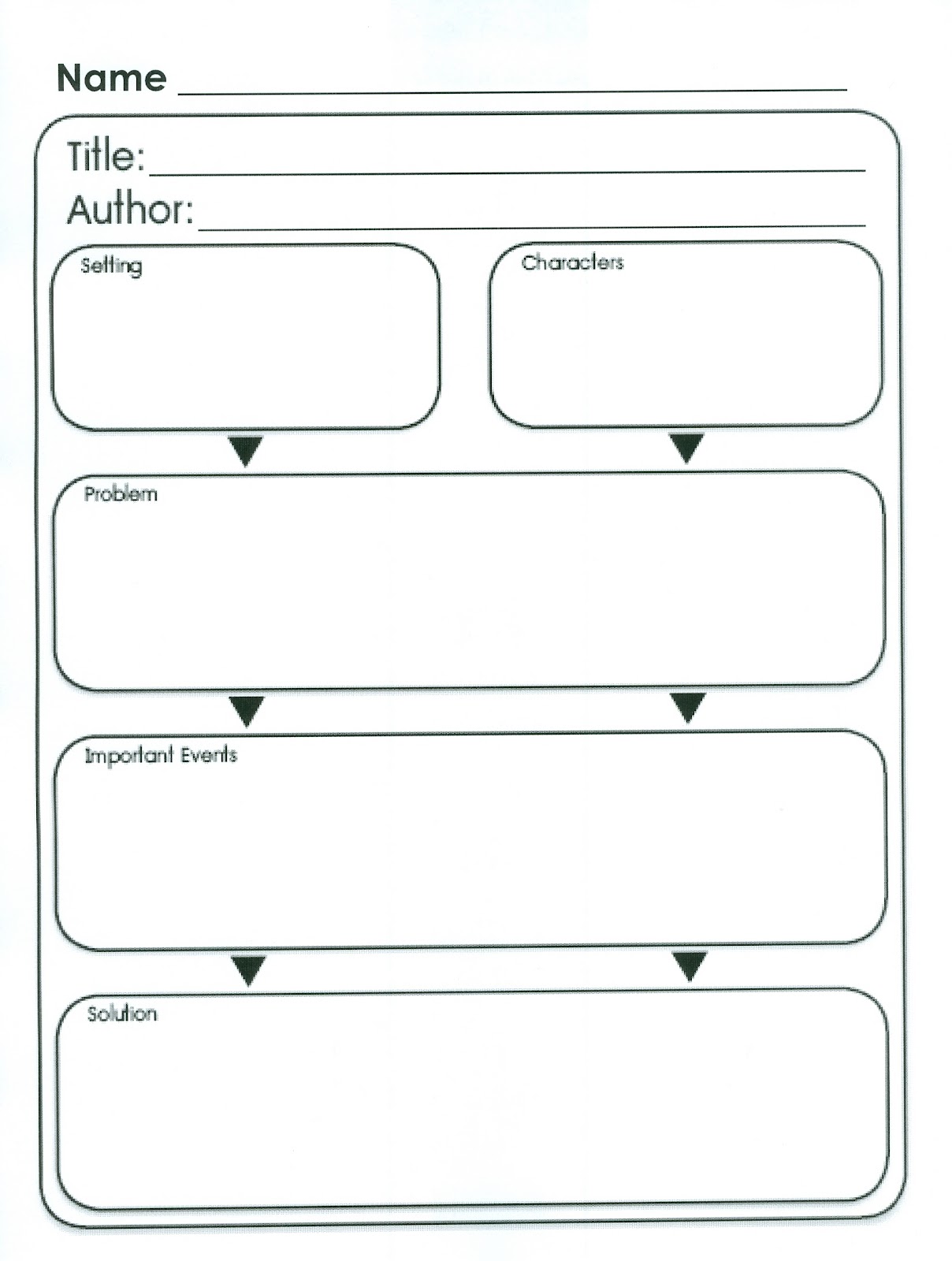
Students in first grade learn about Story Mapping. This is an exercise in breaking down a book into pieces to help with comprehension of the story.  Students learn that a story needs to have a beginning, middle, and an ending. Here are some examples of Story Mapping Worksheets from a first grade class:


Since kids have to think about what they read in this way, I use a similar approach to write picture book manuscripts. I often think of a character first since I love character driven stories so I jot down a few notes on the following things:

     Characters

     Setting

     Problem

     Important Events – Think in 3s. The mc’s first attempt to solve his/her problem doesn’t work and leads to the second attempt which doesn’t work and leads to a third attempt which either solves the problem or creates a new problem. The thing about working in 3s is that they have to make sense together and preferably are connected rather than 3 random ideas that simply don’t work. There are, of course, exceptions to every rule (and this isn’t a rule, just something I have noticed in the hundreds of books I have read).

     Solution


I also like to explain the plot this way: Main Character __________ wants to__________but can’t because __________ so __________.


Chapter Books and Early Mid Grade Novels
Taking the information I gathered in my chapter book and mid grade novel research (posted in a previous blog), I begin writing this way:
Main Character
Age
What makes this MC different?
Problem
Solution

Outline of Chapters:
I plan for 10 chapters but it can be as few as 3 and as many as 50 for a chapter book. I have read that the “sweet spot” for word count is 6,000-10,000 words for chapter books.
At the beginning, you need to show the reader (show don’t tell as often as possible) who is MC is, how old, what the setting is and what the problem or goal is?
After this is shown, let the reader know who or what is getting in the way of the MC solving his/her problem or reaching that goal.
Here come the attempts to solve the problem. Usually, the first and second attempts don’t work because something gets in the way. The first attempt leads to the second attempt which leads to either a new problem or the third attempt.
What is the new problem? Will solving it get the solution to the first problem or create a way that the MC can solve the first problem? If not, then take it out. There is no room for bird walking in picture books or chapter books.
Show how your MC makes a third attempt to solve the problem or reach the goal.
Solving the problem/conflict/reaching the goal now means what? What was the point? What was the point of getting there? Show the reader.
By now, you should be at chapter 10 or near the end of your story .  Wrap it up – Now that the problem is solved, what new problem is created?

Now go write…


Wednesday, February 29, 2012

Story Starter #11 - Retelling a Classic


This post is inspired by one of the many contests posted on Figment*. If you need a little inspiration for a new picture book manuscript or just want to try out a really fun writing exercise, this is for you.

First, select a fairy tale or a classic children’s story.

Here are some examples:       
                       The Old Woman Who Lived in the Shoe
                        Little Red Riding Hood
                        The Three Little Pigs
                        Hansel and Gretel
                        The Three Bears
                        The Little Red Hen
                        The Princess and the Pea
                        The Tortoise and the Hare
If you don’t like these choices, look up Mother Goose or Hans Christian Anderson and select another classic.

Think about the POV this story is usually told from and retell the story through the eyes of one of the other characters. Don't forget to use "What if" questions to drive the plot.

Example:         The Old Woman Who Lived in the Shoe

This is told from 3rd person. Try telling it in 1st person from the Old Lady with all the children. Even better for a pb is to tell it from one of the children’s POV or in 3rd person sharing the story of one of those children who has to share a shoe with soo many brothers and sisters.

Example:         The Three Little Pigs

This story is told from 3rd person and makes the “Big Bad Wolf” out to be a really bad guy. Take his POV. Maybe he has a reason for blowing down their houses (other than eating them). Time for a “What if” question – What if he isn’t blowing down the houses but is sneezing instead?


You get the idea. Now write…


* If you are a student in HS or College, consider entering your story into the contest on Figment.com

Thursday, February 23, 2012

FLAP! Book Trailer


My debut picture book, FLAP!,is coming this June (2012) so I have been taking steps to promote myself as an author/illustrator as well as promote the release of FLAP!. The story takes place on a beautiful autumn day with colorful leaves in the background of many of the illustrations so I filmed a little girl who looks just like my main character running and flapping on top of a mountain in October.

Here it is:

Monday, February 20, 2012

Researching the Genre You Want to Write

Changing Gears

I have tons of ideas for picture books for children ages one to six. So many, in fact, that I posted 10 Story Starters on my blog to share ideas with other kidlit writers and illustrators. The Starters are open ended so it isn’t like I am giving away lots of specific ideas that I will use.

While I love writing picture books, I have a few ideas rolling around for books that are a little longer.  Jumping from picture books to chapter books or mid grade novels required me to do a little research. I had read a ton of books from this genre; I just had not studied them. There is a difference.

Research:
I went to the library and pulled the first books from three different mid grade series books for girls. I knew my target was a girl between ages 7-9 so I looked specifically at early mid grade books/older chapter books. I pulled from Junie B Jones by: Barbara Park, Clementine by: Sara Pennypacker, and Katie Kazoo by: Nancy Krulik.

I took my book choices to a quiet table with an outlet and plugged in my laptop. I opened each book and typed in the following information:

Series Name

Book Name

Author


Publisher

Agent (if mentioned in the Dedication or the About the Author section)

Number of Chapters

Number of Pages in the Whole Book

Average Number of Pages per Chapter

Then I propped up the book next to my computer and typed (yes, typed*) the entire first chapter, then the second. I did not include page breaks – I typed it as it would look in manuscript form so I could see it that way. I used Word Count to get a tally for the number of words in each of these first two chapters, added them together, and divided in two to get an average number of words per chapter. I also divided the number of words per chapter by the number of pages to get an average number of words per page. I typed this into my list of info about that book.

After typing (and thereby reading) the chapters, I added the point of view and the age of the mc.

Next, I set the View on my screen so that I could see 1 whole page on the screen. I looked at it for a few minutes, noting the length of the paragraphs, the amount of dialogue versus description, the tag lines, and the amount of italics and bold letters. I scrolled page my page just looking and taking mental notes (not typing in anything).

I gathered this list of information and typed in the first two chapters of all three books. Then I compared the data from all three. I highly suggest doing this research. I learn by doing so the act of typing in the words of another author helped me to feel the lengths of the sentences, the amount of dialogue, and the amount of description.

*Important Note: Do not use this typed in data and chapters for anything but research. It is plagiarism to copy someone else’s work and claim is as your own. This exercise was only to gather information about successful books in the genre in which I have chosen to write.

With that said, here's just a bit of what I learned from 2 of the books:

Katie Kazoo Switcheroo:

Book: 76 pages

10 chapters

All chapters 6-7 pages long.

Average words per page = 120 (there are b/w line drawings scattered through this book)


Clementine:

Book: 135 pages

10 chapters

Average length of chapters:  11.5 pages (ranged between 9 -14 pages in each chapter)

Average words per page = 103 (there were b/w line drawings scattered through this book)


Summary:

A chapter book or early mid grade novel for this target audience should be about 70-150 pages long – by this, I mean book pages which at an average of 120 words per page is roughly half of a double spaced, 12 pt New York Times with a 1 inch margin page. Translation – a book for this target age is about a 35-60 page manuscript and each chapter is only about 3-6 typed pages.


Next Blog Post:

Outlining your Chapter Book or Mid-Grade Novel

Monday, February 13, 2012

Valentine's Day Writing Contest Entry

I have entered a Valentine's Day writing contest posted by Susanna Leonard Hill. The guidelines are to post a story or poem of unlikely Valentine's (under 200 words) by 5pm Monday, February 13th. The winner gets either Ann Whitford Paul's fabulous book: How to Write Picture Books: A Hands On Guide from Creation to Publication or a manuscript critique from Sussana herself. I already own Ann's book so I would love to win the critique. At 172 words, here it is:


The Forbidden Love of Glassy and Dropper

I slid up close to her ear and whispered, “Classy, will you be my valentine?”

My heart nearly dried out when she said, “It’s Glassy, not Classy. Geez, you can be such a drip.”

“I thought you loved me,” I sighed.

“I did, I do, but,...hey! Stop pouring yourself all over me!” cried Glassy. “I’m trying to explain why we can never be together and there you go filling my heart.”

Then everything changed. I felt surrounded by her love as she held me close.

“Oh Dropper,” she said. “It is just too dangerous for us to be together. Don’t you see?”

“Glassy, you can be soo transparent,” I cried. “Sometimes you seem soo cool and empty inside. I know we’re meant to be together.” I closed my eyes and kissed her silky smooth surface.

“Dropper, my love. Your kisses are so soft and wet that I feel like we’re floating.”

“Glassy! We are lifting. Hold me! Our time is slipping away.”

GULP GULP GULP

“Dropper!” yelled Glassy just before her heart shattered.

Wednesday, February 8, 2012

Liebster Blog Award


Last week, I was awarded the Liebster Blog Award twice! First, by a Jennifer Young. She’s a kidlit author and her blog is Castles in the Sky. If you haven’t checked it out yet, I highly recommend it. Just a few days after Jennifer gave me the award, (before I finished this post) Beth Stillborn gave me the Liebster Blog Award. Beth is also a kidlit author and I highly recommend that you read her blog, By Word of Beth. Thank you, Beth and Jennifer for this award. I appreciate that you both follow my blog of Story Starters.


This award is designed to celebrate bloggers who have fewer than 200 followers. By telling you about these fantastic blogs, I am hoping that you go check them out. While you’re there, click to Join or Follow their blog if you want to read their future posts.


Jennifer Young and Beth Stillborn learned of my blog through our mutual participation in Julie Hedlund’s 12 x 12 in 2012 Challenge. We have signed on to write twelve (yes, twelve) picture book drafts in twelve months. There are over 400 authors and illustrators participating in this challenge and I have learned that many of them have very interesting blogs.


There are tons of amazing kidlit bloggers. Many are authors of children’s books and there are others who are illustrators of children’s books. I am passing on this award to five talented people who are both authors and illustrators (and bloggers). As an author/illustrator myself, I am proud to announce that the Liebster Blog Award goes to…

Diandra Mae
Heather Newman Illustrations
Wendy Martin Illustration
Ramona Davey
Suzanne Del Rizzo: Squish

I am only supposed to give the Award to 5 other bloggers but since these author/artists are soo talented, I am handing out a couple of extra awards to...

Kerie Frances Miller
Jennifer Thermes


Now click on those links above and check them out!

When you receive this award you are supposed to write five things about yourself…
  1. I love to go snowshoeing because when the snow is deep, I get to walk along the tree tops.
  2. I have two small, hairy dogs that love to curl up in my office when I create.
  3. I used to perform in an all youth circus.
  4. My favorite fruit is mango.
  5. I find it relaxing to doodle random things everyday.

If you want to learn more about the 12 x 12 in 2012 Challenge (where I discovered all of these talented author/illustrators) go to Julie Hedlund's Blog.


Tuesday, January 31, 2012

Story Starter #10: Playdate


This story starter gives you a little freedom in choosing the age of your main character. She or he can be 3, 4, 5, 6 – whatever works better for you.

Imagine that you are at your first playdate – well, specifically, the first one without Mommy, Daddy, or any other adult that is important to you with you. You are thrilled. You get to play with new toys (new to you); in a house or yard that isn’t your house or yard, and hang out with different pets. This is all very exciting to you.

Now to turn this fun afternoon into a picture book, let’s add some conflict by asking “What if” questions…


What if their pet is a BIG dog, hairless cat, iguana, screechy bird, snake, or some other pet that is super scary? How do you handle it?

What if your friend won’t share his or her toys? Won’t let go of the video game remote? Grabs every toy you pick up and says, “Hey! That’s MINE!”

What if your friend’s mom calls, “Snack time!” and when you run into the kitchen you see ____________ that you either have never eaten before or have eaten and think that it is totally gross?

What if you do some arts and crafts and accidentally spill the glue or glitter, or both on their floor?

What if your friend wants to play house, dolly, kitchen, tea party, robot, cars and trucks or anything else that you are not in the mood to play?


What if you just really, really want to go home and are afraid to ask the other mom to call your mom? What will you do?

Many kids go to playdates or are part of playgroups from the time they are babies but a parent or grandparent always goes with them. The first time that a child heads to a friend’s house on their own can be exciting and scary. Pretend this is your first time and see through a child’s eyes as you walk into the house. Maybe you see that it’s messy or super tidy. Maybe it smells funny, or smells delicious. Maybe a pet knocks you down and licks your cheek before you can even get in the doorway. Will you do things that you know your own mom would not allow just because your friend’s mom says it’s okay? How will you act or react to new situations?

Now that I have filled your head with ideas – let them spill onto the page and write…

 Post a comment below and let me know what you think of this Story Starter. If you want to see more Story Starters, click on the links on the right side of this page or Join so you don't miss future posts.

Monday, January 23, 2012

Story Starter #9: Grass is Greener

I have written several story starters asking you to be a preschooler, Kindergartener, or a first grader. For this one, I want you to leap into the mind of an animal, specifically, a young animal. You might be an animal that lives as a pet in a child's home. Maybe you live in the forest or near a pond or even in the zoo. Whatever it is, you want something to change... You are well taken care of, you have food, shelter, family - you should be happy. To you, everyone else seems happy.

To turn this vague concept into a book for children, let's ask some "What if" questions.

What if you live in the zoo and wish you lived in one of the other habitats? Maybe the monkey's have more things to climb on or the seals have more space to swim.

What if your mode of transportation is flying but you wish you could swim?

What if you are friends with animals that climb but you are a duck and can't climb trees?

What if your friends all eat worms or bugs and you eat grass?

What if you want to change colors like a Chameleon or play music like a Katydid - but you can't?

What if the humans that you live with are acting like they love their other pet more that you?

You need or want to change something you can do or something you can eat or where you live or play because it looks like the animals that can do that, eat that, live there, or play there are having a lot more fun than you are.

Now write...

Tuesday, January 17, 2012

Story Starter #8: Inspiration

I have posted seven story starters for you all to think about and use as a springboard for your own creative ideas. There are many other ways to come up with ideas for your new manuscripts...

One method is to look at photos, magazines, and posters. If you are or are trying to become a kidlit author, you also need to read, read, read picture books old and new that are already published. Some will have illustrations or story lines that will inspire you to create a manuscript. Think about what that character might do after his or her problem is solved - does it spiral into a new problem? What might the character do the next day - would he or she get into a whole new kind of trouble? Preferrably, you can create your own main characters so maybe you think about the friends of the character of a book you enjoy. What would his or her friends be like and what would their problems be?

For me, my most recent inspiration is a book that my six year old checked out of the library. Don't Laugh, Joe! by Keiko Kasza has great page turns, kept my son and I both laughing (because the main character isn't supposed to), and made us want to read it a few more times before returning it. (I plan to buy it and add it to my collection of great books.)
Little Joe can't stop laughing. His mom is worried because she has to teach him to play dead when a predator is near and he can't do it without giggling and wiggling. This is a great example of an animal species that has to do something that they are supposed to be able to do but can't. Can you think of other animals that do odd things? You may have heard or read that publishers don't want animals that are personified so let them be animals and figure out what they can, or in this case, can not do.

Now ask some "What if" questions...
What if a bird can't fly?
What if a fish is born with a goofy fin? Oh wait - that is the basis of Finding Nemo.
What if a cat can't stay clean?
What if a dog can't bark?
What if a cricket can't chirp?

There are a million of these...
Get creative and do a little research on lesser known animals that do things like whistle, peep, dig, fly, climb, sniff...
Now write...

Post a comment below and let me know what inspires you?

Wednesday, January 11, 2012

Story Starter #7


Today's Story Starter is about being sick.

You are four years old and you woke up today feeling miserable. Your head is stuffy, your throat is itchy, and your eyes are watery. The only reason that you got out of bed this morning was because you had to go with Mommy to drop your brother off at school. You want to go back to sleep but can’t. Mommy is working from home today so she can stay with you but she has to do her work. What do you do? Are you going to watch television all day? Snuggle up in Mommy and Daddy’s bed? Stay in your own room and play with your toys?

Now to help turn this sickly day into a picture book, ask some “What if” questions:

What if the batteries are dead on your favorite toy?

What if the television stops working?

What if all you want to eat is Jello and there isn’t any in the house?

What if you can’t find your favorite Dolly and you just want to snuggle her in your bed because you feel horrible.

What if you find out that school is canceled because of a power shortage and your friends want to know if you can come out and play? Will you suddenly feel much better?

What if you are hungry and Mommy is busy on a work call. Will you help yourself to whatever you want to eat in the kitchen?
If you were four years old and you were home sick, what would you want to do all day? What if you couldn’t play that game, eat that snack, watch that movie? Etc… What would you do to solve your problem?

Now write…don’t over think it. Your first sentences don’t have to turn into a book. See where it goes. You may write a page of what comes to mind about being a sick preschooler and then hit upon a spark that ignites into a story. Good luck.

If this starter inspires you, post a comment and let me know. If you're looking for more story starters to use as a springboard for your writing, you'll find them in the index on the right side of the blog.