Showing posts with label kidlit. Show all posts

Thursday, February 4, 2016

DOODLE DAY!

The History of Doodle Day

Doodle Day began as a one month challenge back in May of 2013 (you can see the original post announcing the challenge HERE). I was creating a daily doodle and my then 4 year old was carrying her little pink sketchbook to pre-k each day so she could sketch during nap time. On April 29th, 2013, Erin told me, on the way to school, that she wanted to start doodling the same thing I was doodling each day and we should call it Doodle Day May. As I she got out of the car, she said, "and you should blog about it and invite our friends."

Well, I loved the idea so I did go home and blog about it and I did invite our friends. The next morning, there were about 60 people who had commented on the blog or expressed interest that they wanted to doodle with Erin and I and now 34 months later, Doodle Day never stopped. Erin and I still doodle every day and the group has grown to more than 600 people! We have a new theme each month and all doodlers are welcome (well, as long as you keep the doodles family friendly and rated G since we have some pretty young artists in this group).

If you'd like to join Doodle Day, the Facebook group can be found HERE. 

Today, we are on day 4 of our February 2016 theme UNLIKELY FRIENDS. The prompts are about creating a quick doodle of pairs of animals that you wouldn't typically see together enjoying each other's company.

Here's a sample of a couple of my doodles this month:


Doodling every day for years has helped me developed my style, play with different media, create characters, and it's just fun. 

If you are a grown up or a child, a parent or single, an artist, teacher, media center specialist, or anybody else who enjoys doodling - consider joining the very supportive online community of Doodle Day. 

-Alison


Tuesday, May 1, 2012

Author/Illustrator - Brenda A. Harris

Each week this May and June (and possibly longer if I can catch these super busy artists), I will feature Author/Illustrators. In the genre of children's literature, there are authors, illustrators, and author/illustrators. This last group does it all and I want to know more about them and their creative process.


My name is Brenda A. Harris and I’m a writer/illustrator/artist.

How long have you been creating art for children?

Well, I’ve always been an artist .  When I was just a baby, my grandfather (an artist) used sit me on his lap, and teach me how to draw people.

How long have you been writing for children?

 I’ve always been a storyteller.  Being the oldest of four children, I liked making up stories for my siblings. Whenever my littlest sister was ill, I liked to help her feel better by telling her stories.  Later, when I had children of my own, I wrote and illustrated stories for them.  I’ve always believed children can fall in love writing, if they discover the magic and power writing gives it’s creator. With that thought in mind, I helped my four children fall in love with reading, writing and art.

Has your art or writing been published yet?

Hardly.  In 2006 I published my first book. It was mandatory.  I was in school getting my teaching degree and the prof gave us a project - produce a children’s book.  I enjoyed producing and self-publishing it. I wish I’d had more time to  work on it.  That was when the writing/illustrating bug bit me.

In 2007, I started teaching in an elementary school. I began to write and read out loud my stories to my students.  I desperately wanted them to see, that library books begin by writing down stories we create.  Another one of my goals was to have students co-write and produce children’s books.  They did. They wrote, illustrated, and even made the book covers for their stories.  The school staff stapled and laminated them.  Then, the books were placed in the school library for students and teachers to read. Even now, I am so happy to have been given the chance to work with my students in this way.

After four years of teaching, I decided to devote myself fulltime to writing and illustrating stories. My husband agreed, and we set a tight budget. I joined SCBWI ( Houston chapter) and learned to self-publish.  I now have an eBook on Amazon.  It’s an illustrated children’s chapter book.  The characters are animals whose habitats can be found in Texas.  I so enjoyed doing research on the animals.  Wildlife rocks!

Where do you like to do your artwork? 

I work wherever I feel most comfortable at that moment: sitting on the floor/table, standing, kneeling, etc.  For example, when I’m tracing my sketches onto my final drawing surface, I tape the sketch  to a window.  The sunlight helps me trace the images onto my art paper, as I stand.

Do you prefer digital or traditional media to create your artwork?

There is something so beautiful and organic about traditional media.  It just sings.  It’s like poetry to me.  Then, when I work with digital, it’s so e- a- s- y!  I just love it.  What can I do, but bounce back and force from traditional to digital.  Sometimes, I even combine them.


Can you describe your creative process for us?

First, I come up with an idea for an illustration. I research the plant, animal, location, etc.  If the illustration involves people, I go into DAZ Studio 4 and use a Poser like program to position and shape a digital mannequin.  I paint it and add lighting.  Once I’ve finished the digital figure, I trace it onto art paper.  Now, it’s no longer digital.   I sketch the background and any other characters.  I retrace in ink.

Second , if I choose, I can scan my sketch into the computer and bring up my scanned image using GIMP.  I play with the color palette in GIMP.  This helps establish  my color scheme.

 Last, I decide whether to use traditional (oil/pencil/ink) or digital media to complete the illustration.


Which comes first, the story or the illustrations?

I’m a visual person, so I think it’s the illustrations.

To learn more about Brenda go to:

My art portfolio is on the www.scbwi.org website.  Make sure you search for Brenda A. Harris. (There’s another illustrator named Brenda Harris!) 
My blog is www.drawacircle.net . 
I’m also on Twitter at @abrendita .

Friday, April 27, 2012

Daily Doodle: Waterway!


This only appears to be a tremendous waste of water. The cement tilts toward the grass so the water is helping the grass and bushes along the other edge of the driveway.

Wednesday, March 14, 2012

Outlining & Planning Before You Write


Keep in mind that there are many, many authors who write without outlining first. They have an idea or a main character and just start writing. There is no wrong way to write a story. I taught writing to fourth graders and always had them use a Story Planner before writing so that I could see their plot before they spent a lot of time writing out the story. I like thinking about where the story needs to get to (the exciting part) so that I could help my students write a story that gets there. I do a very brief plan for picture books and slightly more detailed outline for chapter books. This is how I do it:

Picture Books

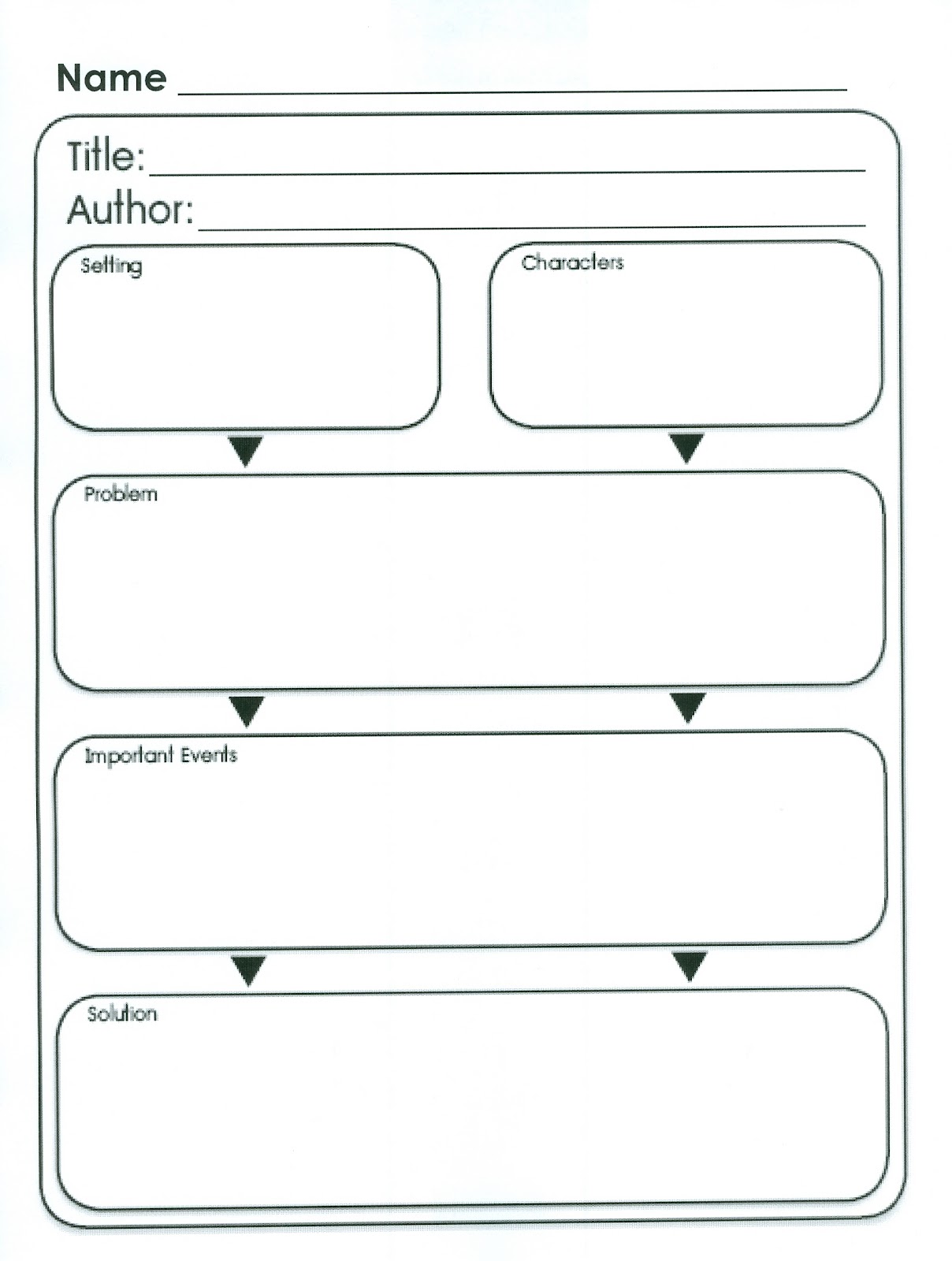
Students in first grade learn about Story Mapping. This is an exercise in breaking down a book into pieces to help with comprehension of the story.  Students learn that a story needs to have a beginning, middle, and an ending. Here are some examples of Story Mapping Worksheets from a first grade class:


Since kids have to think about what they read in this way, I use a similar approach to write picture book manuscripts. I often think of a character first since I love character driven stories so I jot down a few notes on the following things:

     Characters

     Setting

     Problem

     Important Events – Think in 3s. The mc’s first attempt to solve his/her problem doesn’t work and leads to the second attempt which doesn’t work and leads to a third attempt which either solves the problem or creates a new problem. The thing about working in 3s is that they have to make sense together and preferably are connected rather than 3 random ideas that simply don’t work. There are, of course, exceptions to every rule (and this isn’t a rule, just something I have noticed in the hundreds of books I have read).

     Solution


I also like to explain the plot this way: Main Character __________ wants to__________but can’t because __________ so __________.


Chapter Books and Early Mid Grade Novels
Taking the information I gathered in my chapter book and mid grade novel research (posted in a previous blog), I begin writing this way:
Main Character
Age
What makes this MC different?
Problem
Solution

Outline of Chapters:
I plan for 10 chapters but it can be as few as 3 and as many as 50 for a chapter book. I have read that the “sweet spot” for word count is 6,000-10,000 words for chapter books.
At the beginning, you need to show the reader (show don’t tell as often as possible) who is MC is, how old, what the setting is and what the problem or goal is?
After this is shown, let the reader know who or what is getting in the way of the MC solving his/her problem or reaching that goal.
Here come the attempts to solve the problem. Usually, the first and second attempts don’t work because something gets in the way. The first attempt leads to the second attempt which leads to either a new problem or the third attempt.
What is the new problem? Will solving it get the solution to the first problem or create a way that the MC can solve the first problem? If not, then take it out. There is no room for bird walking in picture books or chapter books.
Show how your MC makes a third attempt to solve the problem or reach the goal.
Solving the problem/conflict/reaching the goal now means what? What was the point? What was the point of getting there? Show the reader.
By now, you should be at chapter 10 or near the end of your story .  Wrap it up – Now that the problem is solved, what new problem is created?

Now go write…


Wednesday, February 29, 2012

Story Starter #11 - Retelling a Classic


This post is inspired by one of the many contests posted on Figment*. If you need a little inspiration for a new picture book manuscript or just want to try out a really fun writing exercise, this is for you.

First, select a fairy tale or a classic children’s story.

Here are some examples:       
                       The Old Woman Who Lived in the Shoe
                        Little Red Riding Hood
                        The Three Little Pigs
                        Hansel and Gretel
                        The Three Bears
                        The Little Red Hen
                        The Princess and the Pea
                        The Tortoise and the Hare
If you don’t like these choices, look up Mother Goose or Hans Christian Anderson and select another classic.

Think about the POV this story is usually told from and retell the story through the eyes of one of the other characters. Don't forget to use "What if" questions to drive the plot.

Example:         The Old Woman Who Lived in the Shoe

This is told from 3rd person. Try telling it in 1st person from the Old Lady with all the children. Even better for a pb is to tell it from one of the children’s POV or in 3rd person sharing the story of one of those children who has to share a shoe with soo many brothers and sisters.

Example:         The Three Little Pigs

This story is told from 3rd person and makes the “Big Bad Wolf” out to be a really bad guy. Take his POV. Maybe he has a reason for blowing down their houses (other than eating them). Time for a “What if” question – What if he isn’t blowing down the houses but is sneezing instead?


You get the idea. Now write…


* If you are a student in HS or College, consider entering your story into the contest on Figment.com

Monday, February 20, 2012

Researching the Genre You Want to Write

Changing Gears

I have tons of ideas for picture books for children ages one to six. So many, in fact, that I posted 10 Story Starters on my blog to share ideas with other kidlit writers and illustrators. The Starters are open ended so it isn’t like I am giving away lots of specific ideas that I will use.

While I love writing picture books, I have a few ideas rolling around for books that are a little longer.  Jumping from picture books to chapter books or mid grade novels required me to do a little research. I had read a ton of books from this genre; I just had not studied them. There is a difference.

Research:
I went to the library and pulled the first books from three different mid grade series books for girls. I knew my target was a girl between ages 7-9 so I looked specifically at early mid grade books/older chapter books. I pulled from Junie B Jones by: Barbara Park, Clementine by: Sara Pennypacker, and Katie Kazoo by: Nancy Krulik.

I took my book choices to a quiet table with an outlet and plugged in my laptop. I opened each book and typed in the following information:

Series Name

Book Name

Author


Publisher

Agent (if mentioned in the Dedication or the About the Author section)

Number of Chapters

Number of Pages in the Whole Book

Average Number of Pages per Chapter

Then I propped up the book next to my computer and typed (yes, typed*) the entire first chapter, then the second. I did not include page breaks – I typed it as it would look in manuscript form so I could see it that way. I used Word Count to get a tally for the number of words in each of these first two chapters, added them together, and divided in two to get an average number of words per chapter. I also divided the number of words per chapter by the number of pages to get an average number of words per page. I typed this into my list of info about that book.

After typing (and thereby reading) the chapters, I added the point of view and the age of the mc.

Next, I set the View on my screen so that I could see 1 whole page on the screen. I looked at it for a few minutes, noting the length of the paragraphs, the amount of dialogue versus description, the tag lines, and the amount of italics and bold letters. I scrolled page my page just looking and taking mental notes (not typing in anything).

I gathered this list of information and typed in the first two chapters of all three books. Then I compared the data from all three. I highly suggest doing this research. I learn by doing so the act of typing in the words of another author helped me to feel the lengths of the sentences, the amount of dialogue, and the amount of description.

*Important Note: Do not use this typed in data and chapters for anything but research. It is plagiarism to copy someone else’s work and claim is as your own. This exercise was only to gather information about successful books in the genre in which I have chosen to write.

With that said, here's just a bit of what I learned from 2 of the books:

Katie Kazoo Switcheroo:

Book: 76 pages

10 chapters

All chapters 6-7 pages long.

Average words per page = 120 (there are b/w line drawings scattered through this book)


Clementine:

Book: 135 pages

10 chapters

Average length of chapters:  11.5 pages (ranged between 9 -14 pages in each chapter)

Average words per page = 103 (there were b/w line drawings scattered through this book)


Summary:

A chapter book or early mid grade novel for this target audience should be about 70-150 pages long – by this, I mean book pages which at an average of 120 words per page is roughly half of a double spaced, 12 pt New York Times with a 1 inch margin page. Translation – a book for this target age is about a 35-60 page manuscript and each chapter is only about 3-6 typed pages.


Next Blog Post:

Outlining your Chapter Book or Mid-Grade Novel

Monday, February 13, 2012

Valentine's Day Writing Contest Entry

I have entered a Valentine's Day writing contest posted by Susanna Leonard Hill. The guidelines are to post a story or poem of unlikely Valentine's (under 200 words) by 5pm Monday, February 13th. The winner gets either Ann Whitford Paul's fabulous book: How to Write Picture Books: A Hands On Guide from Creation to Publication or a manuscript critique from Sussana herself. I already own Ann's book so I would love to win the critique. At 172 words, here it is:


The Forbidden Love of Glassy and Dropper

I slid up close to her ear and whispered, “Classy, will you be my valentine?”

My heart nearly dried out when she said, “It’s Glassy, not Classy. Geez, you can be such a drip.”

“I thought you loved me,” I sighed.

“I did, I do, but,...hey! Stop pouring yourself all over me!” cried Glassy. “I’m trying to explain why we can never be together and there you go filling my heart.”

Then everything changed. I felt surrounded by her love as she held me close.

“Oh Dropper,” she said. “It is just too dangerous for us to be together. Don’t you see?”

“Glassy, you can be soo transparent,” I cried. “Sometimes you seem soo cool and empty inside. I know we’re meant to be together.” I closed my eyes and kissed her silky smooth surface.

“Dropper, my love. Your kisses are so soft and wet that I feel like we’re floating.”

“Glassy! We are lifting. Hold me! Our time is slipping away.”

GULP GULP GULP

“Dropper!” yelled Glassy just before her heart shattered.