Showing posts with label writing. Show all posts

Thursday, April 11, 2013

Story Starter #13 - National Pet Day


National Pet Day, April 11, 2013

In honor of National Pet Day let's write come up with some ideas for picture books. First, come up with a list of pets - don't forget to include some crazy ones along with those more common pets:

Be specific on breed if you can. It will help an illustrator see the pet you are writing about.
Dog
Cat
Rabbit
Hamster
Fish
Bird
Ferret
Snake
Racoon
Tarantula
etc...

Now create a list of things that happen with pets - think of good things and bad things:
Get a new pet
Lose a loved pet (passes away, runs away, gets lost in the park, etc...)
Pet has babies
Pet is in a beauty pageant
Pet is in a walk event to raise $ for a local shelter
Dress up a pet
Pet breaks something in the house
etc...

Now take list 1 and list 2 and combine them in the most zany way that you can. Don't forget to use those two special words, "What if..." to create the premise for your story.

What if my pet racoon has a birthday party and my neighbor brings his pet dog?
What if I sneak my pet to school (uh oh, this has been done a LOT - skip this one)
What if I enter my pet bird in a local pet pageant but he can't sing? What is his talent?
What if my pet Lionfish gets his fin caught in a _______and our cat is the only one home to help?
etc...

Now write. There are no bad ideas. No wrong answers or combinations. The wackier, the better.

Have fun and post a comment if you enjoy this story starter.

Wednesday, February 20, 2013

Writing Wednesday - Story Starter #12


On this day, February 20, 1962, the first United States astronaut orbited the Earth. John Glenn Day commemorates this launch from Cape Canaveral, Florida. Glenn circled the Earth three times in a space capsule before landing it safely in the ocean.

This day in history can prompt a number of stories for children. Here are some story starters to get the juices flowing:

If you could travel in space, what would you see?
If you could go anywhere in the world, where would you go?

To turn this writing prompt into a story for children - namely a picture book, you could ask What if questions. Here are some samples:

What if a pre-schooler snuck onto a shuttle and was still on it when it took off?
What if a Kindergarten class took a field trip to Cape Canaveral and a student pushed the Big Red Button marked "Launch"?
What if a four year old went with his family to see a launch and when the smoke cleared, he something amazing? What did he/she see?
What if the astronauts decided to take a pet hamster into space and from all the kids in America, they chose your pet?
What if you are a dog and you just saw your favorite boy get into a shuttle and take off, you need to find him, what will you do? How will you follow him into space?

Come up with some What if questions of your own or use one of these. Don't think, just write.

Leave a comment letting me know what you think of this Story Starter. I posted eleven of them in 2012, if you want me to post them weekly on Writing Wednesday, let me know.

Thursday, December 13, 2012

My 2012: A Look Back


2012 has beens my year for challenges and acronyms. I participated in Julie Hedlund's 12x12 all year, Paula Yoo's NaPiBoWriWee in May, Tara Lazar's PiBoIdMo in November, and Linda Silvestri's SkADaMo in November. In addition to all of these, my debut picture released November 15th. It was a lot of challenges and a lot of work. In case you don't know what these acronyms stand for, here are some quick definitions:

12x12 - Write 12 picture book drafts in 12 months. I did it. Thank you Julie Hedlund.

NaPiBoWriWee - National Picture Book Writing Week, Write 7 picture book manuscripts in 7 days. I did it and with 12x12, I wrote 18 manuscripts this year. Thank you Paula Yoo.

PiBoIdMo - Picture Book Idea Month, Come up with a concept for a picture book storyline every day of the month of November. I completed this challenge this year and last year. I used many of last year's ideas to create drafts for the first two challenges on this list. Thank you Tara Lazar.

SkADaMo - Sketch a Day Month, Create a sketch every day in November and post them on your blog. I posted 23 sketches on this blog. I actually created one every day but could not post some because they are part of a picture book dummy for a NaPiBoWriWee story I wrote in the 2011 challenge. This was my first year doing  this challenge and it was a lot of fun. Can't think too long when you have to produce a sketch and post it that day. Thank you Linda Silvestri (who also created the 12x12 badge you see at the top of this post.

As if November wasn't busy enough with writing a draft for 12x12, coming up with an idea for a story everyday for PiBoIdMo, and creating a sketch everyday for SkADaMo - a picture book that I wrote and illustrated launched on November 15th. FLAP! is available on Amazon, Barnes and Noble, Indiebound, and my website (if you want an autographed copy). See image of FLAP! cover on the sidebar.

Now that I have thanked the four talented women who led these challenges, I need to thank the other writers and illustrators who participated in these challenges with me. Thank you. I read many of your pitches, critiqued many of your stories, reviewed many of your sketches. You are all very talented and supportive and I appreciate the communities created within these writing groups.

But wait! There's more! Because of exposure through 12x12, I was invited to join a group of writer's who had books coming out in 2012 and share marketing advice and efforts. Thank you Picture Book Pluggers. I also created a business called AH Designs in which I create swag for authors and other professionals - including bookmarks, business cards, postcards, coloring pages, book formating, etc... Thank you Susanna Hill for helping to get this ball rolling.

One More Thing! Through the connections I made in 12x12, I also started an online picture book critique group called Flowing Words with several talented writers and illustrators. Thank you to those writers for sharing your manuscripts with me and for helping me polish my writing.

Whew, now I can breathe for a couple of weeks until 12x12 in 2013 begins this January. Are you with me? There is nothing more motivating that a group of writers struggling along with you and telling you that YOU CAN DO IT.

Tuesday, November 6, 2012

SkADaMo & PiBoIdMo 2012


In 2011, I participated in PiBoIdMo - Picture Book Idea Month during the month of November while the better known NaNoWriMo was going on. NaNo challenges writers to complete 50,000 words in a month. Since this isn't really applicable to those of us who write picture books, chapter books, or even mid-grade novels, Tara Lazar created a challenge geared toward us. PiBo challenges writers and illustrators to come up with 30 book ideas in 30 days. We aren't expected to write it (can work on some of them during Paula Yoo's NaPiBoWriWee in May) but we do write a line, an outline, a concept, a pitch, or illustrate a scene - whatever wraps up a picture book concept for that individual.

When I come up with concepts, I often doodle my idea so that I don't lose the visual of the story idea. Yesterday, I learned about SkADaMo which is Sketch a Day Month - also happening in November. It lines up very nicely with PiBoIdMo and since I often create a doodle anyway, this year I am attempting both challenges at the same time.

Today is day 6 so here are my first 6 sketches:

SkADaMo 6 - Ant Boat
 
SkADaMo 5 - Meeting Mike
 
SkADaMo 4 - After T&Ting


SkADaMo 3 - Dog Wash
 
SkADaMo 2 - The Storm
 
 
SkADaMo 1 - Swinging Trapeze


Wednesday, March 14, 2012

Outlining & Planning Before You Write


Keep in mind that there are many, many authors who write without outlining first. They have an idea or a main character and just start writing. There is no wrong way to write a story. I taught writing to fourth graders and always had them use a Story Planner before writing so that I could see their plot before they spent a lot of time writing out the story. I like thinking about where the story needs to get to (the exciting part) so that I could help my students write a story that gets there. I do a very brief plan for picture books and slightly more detailed outline for chapter books. This is how I do it:

Picture Books

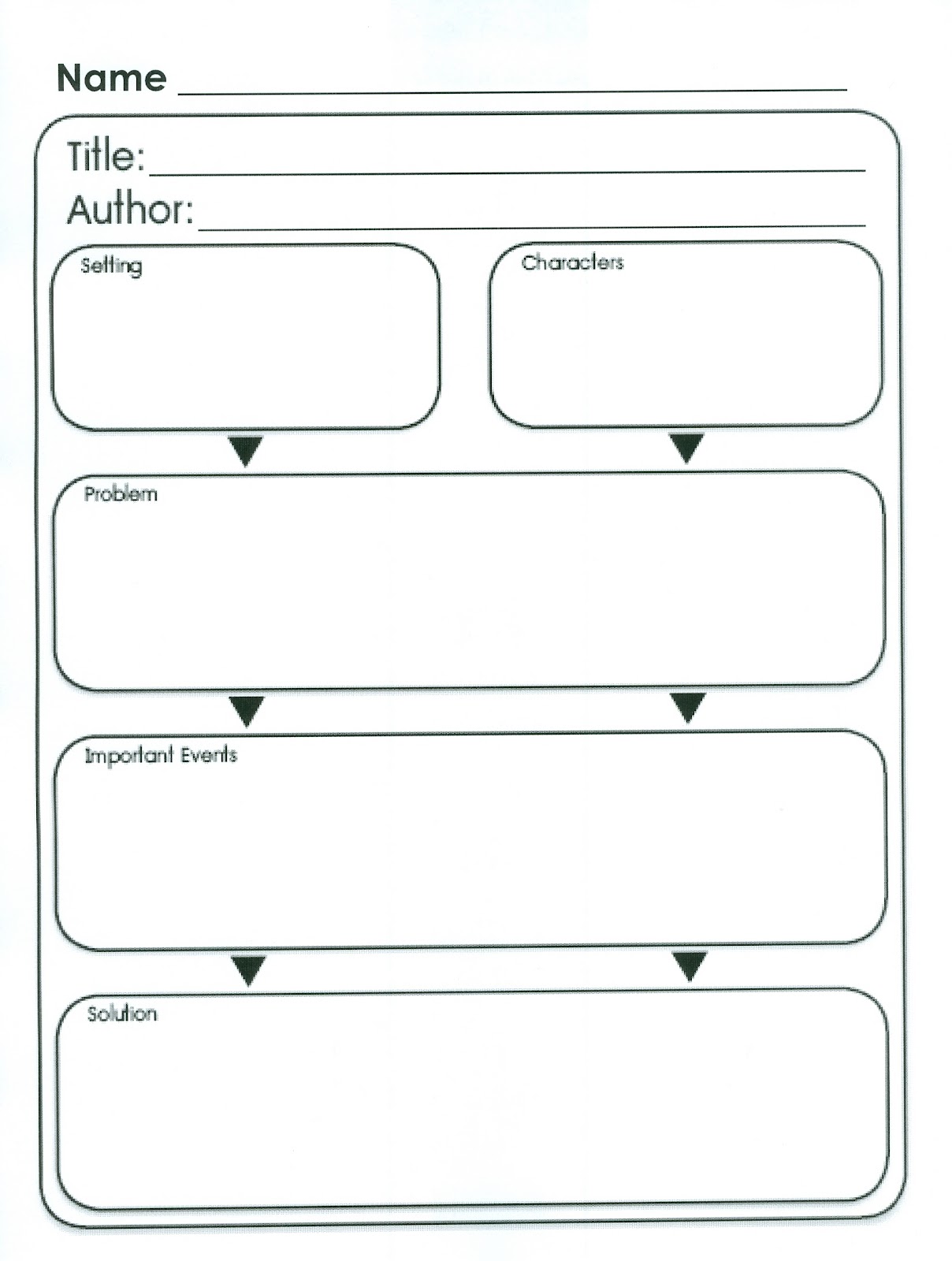
Students in first grade learn about Story Mapping. This is an exercise in breaking down a book into pieces to help with comprehension of the story.  Students learn that a story needs to have a beginning, middle, and an ending. Here are some examples of Story Mapping Worksheets from a first grade class:


Since kids have to think about what they read in this way, I use a similar approach to write picture book manuscripts. I often think of a character first since I love character driven stories so I jot down a few notes on the following things:

     Characters

     Setting

     Problem

     Important Events – Think in 3s. The mc’s first attempt to solve his/her problem doesn’t work and leads to the second attempt which doesn’t work and leads to a third attempt which either solves the problem or creates a new problem. The thing about working in 3s is that they have to make sense together and preferably are connected rather than 3 random ideas that simply don’t work. There are, of course, exceptions to every rule (and this isn’t a rule, just something I have noticed in the hundreds of books I have read).

     Solution


I also like to explain the plot this way: Main Character __________ wants to__________but can’t because __________ so __________.


Chapter Books and Early Mid Grade Novels
Taking the information I gathered in my chapter book and mid grade novel research (posted in a previous blog), I begin writing this way:
Main Character
Age
What makes this MC different?
Problem
Solution

Outline of Chapters:
I plan for 10 chapters but it can be as few as 3 and as many as 50 for a chapter book. I have read that the “sweet spot” for word count is 6,000-10,000 words for chapter books.
At the beginning, you need to show the reader (show don’t tell as often as possible) who is MC is, how old, what the setting is and what the problem or goal is?
After this is shown, let the reader know who or what is getting in the way of the MC solving his/her problem or reaching that goal.
Here come the attempts to solve the problem. Usually, the first and second attempts don’t work because something gets in the way. The first attempt leads to the second attempt which leads to either a new problem or the third attempt.
What is the new problem? Will solving it get the solution to the first problem or create a way that the MC can solve the first problem? If not, then take it out. There is no room for bird walking in picture books or chapter books.
Show how your MC makes a third attempt to solve the problem or reach the goal.
Solving the problem/conflict/reaching the goal now means what? What was the point? What was the point of getting there? Show the reader.
By now, you should be at chapter 10 or near the end of your story .  Wrap it up – Now that the problem is solved, what new problem is created?

Now go write…


Wednesday, February 29, 2012

Story Starter #11 - Retelling a Classic


This post is inspired by one of the many contests posted on Figment*. If you need a little inspiration for a new picture book manuscript or just want to try out a really fun writing exercise, this is for you.

First, select a fairy tale or a classic children’s story.

Here are some examples:       
                       The Old Woman Who Lived in the Shoe
                        Little Red Riding Hood
                        The Three Little Pigs
                        Hansel and Gretel
                        The Three Bears
                        The Little Red Hen
                        The Princess and the Pea
                        The Tortoise and the Hare
If you don’t like these choices, look up Mother Goose or Hans Christian Anderson and select another classic.

Think about the POV this story is usually told from and retell the story through the eyes of one of the other characters. Don't forget to use "What if" questions to drive the plot.

Example:         The Old Woman Who Lived in the Shoe

This is told from 3rd person. Try telling it in 1st person from the Old Lady with all the children. Even better for a pb is to tell it from one of the children’s POV or in 3rd person sharing the story of one of those children who has to share a shoe with soo many brothers and sisters.

Example:         The Three Little Pigs

This story is told from 3rd person and makes the “Big Bad Wolf” out to be a really bad guy. Take his POV. Maybe he has a reason for blowing down their houses (other than eating them). Time for a “What if” question – What if he isn’t blowing down the houses but is sneezing instead?


You get the idea. Now write…


* If you are a student in HS or College, consider entering your story into the contest on Figment.com

Monday, February 20, 2012

Researching the Genre You Want to Write

Changing Gears

I have tons of ideas for picture books for children ages one to six. So many, in fact, that I posted 10 Story Starters on my blog to share ideas with other kidlit writers and illustrators. The Starters are open ended so it isn’t like I am giving away lots of specific ideas that I will use.

While I love writing picture books, I have a few ideas rolling around for books that are a little longer.  Jumping from picture books to chapter books or mid grade novels required me to do a little research. I had read a ton of books from this genre; I just had not studied them. There is a difference.

Research:
I went to the library and pulled the first books from three different mid grade series books for girls. I knew my target was a girl between ages 7-9 so I looked specifically at early mid grade books/older chapter books. I pulled from Junie B Jones by: Barbara Park, Clementine by: Sara Pennypacker, and Katie Kazoo by: Nancy Krulik.

I took my book choices to a quiet table with an outlet and plugged in my laptop. I opened each book and typed in the following information:

Series Name

Book Name

Author


Publisher

Agent (if mentioned in the Dedication or the About the Author section)

Number of Chapters

Number of Pages in the Whole Book

Average Number of Pages per Chapter

Then I propped up the book next to my computer and typed (yes, typed*) the entire first chapter, then the second. I did not include page breaks – I typed it as it would look in manuscript form so I could see it that way. I used Word Count to get a tally for the number of words in each of these first two chapters, added them together, and divided in two to get an average number of words per chapter. I also divided the number of words per chapter by the number of pages to get an average number of words per page. I typed this into my list of info about that book.

After typing (and thereby reading) the chapters, I added the point of view and the age of the mc.

Next, I set the View on my screen so that I could see 1 whole page on the screen. I looked at it for a few minutes, noting the length of the paragraphs, the amount of dialogue versus description, the tag lines, and the amount of italics and bold letters. I scrolled page my page just looking and taking mental notes (not typing in anything).

I gathered this list of information and typed in the first two chapters of all three books. Then I compared the data from all three. I highly suggest doing this research. I learn by doing so the act of typing in the words of another author helped me to feel the lengths of the sentences, the amount of dialogue, and the amount of description.

*Important Note: Do not use this typed in data and chapters for anything but research. It is plagiarism to copy someone else’s work and claim is as your own. This exercise was only to gather information about successful books in the genre in which I have chosen to write.

With that said, here's just a bit of what I learned from 2 of the books:

Katie Kazoo Switcheroo:

Book: 76 pages

10 chapters

All chapters 6-7 pages long.

Average words per page = 120 (there are b/w line drawings scattered through this book)


Clementine:

Book: 135 pages

10 chapters

Average length of chapters:  11.5 pages (ranged between 9 -14 pages in each chapter)

Average words per page = 103 (there were b/w line drawings scattered through this book)


Summary:

A chapter book or early mid grade novel for this target audience should be about 70-150 pages long – by this, I mean book pages which at an average of 120 words per page is roughly half of a double spaced, 12 pt New York Times with a 1 inch margin page. Translation – a book for this target age is about a 35-60 page manuscript and each chapter is only about 3-6 typed pages.


Next Blog Post:

Outlining your Chapter Book or Mid-Grade Novel