Showing posts with label picture books. Show all posts

Thursday, April 11, 2013

Daily Doodles from this Week

This is how I feel everyday - in addition to the "mom" tasks that I do each day.
 
I love the circus - the variety of acts, the different performers, a dozen different things happening at once. I performed in the circus when I was very young and these are some of my fond memories.
 
My daughter told me today that she wanted "to do something relaxing like ride on a giant panda through the sky." I loved the image so this what I created.

Story Starter #13 - National Pet Day


National Pet Day, April 11, 2013

In honor of National Pet Day let's write come up with some ideas for picture books. First, come up with a list of pets - don't forget to include some crazy ones along with those more common pets:

Be specific on breed if you can. It will help an illustrator see the pet you are writing about.
Dog
Cat
Rabbit
Hamster
Fish
Bird
Ferret
Snake
Racoon
Tarantula
etc...

Now create a list of things that happen with pets - think of good things and bad things:
Get a new pet
Lose a loved pet (passes away, runs away, gets lost in the park, etc...)
Pet has babies
Pet is in a beauty pageant
Pet is in a walk event to raise $ for a local shelter
Dress up a pet
Pet breaks something in the house
etc...

Now take list 1 and list 2 and combine them in the most zany way that you can. Don't forget to use those two special words, "What if..." to create the premise for your story.

What if my pet racoon has a birthday party and my neighbor brings his pet dog?
What if I sneak my pet to school (uh oh, this has been done a LOT - skip this one)
What if I enter my pet bird in a local pet pageant but he can't sing? What is his talent?
What if my pet Lionfish gets his fin caught in a _______and our cat is the only one home to help?
etc...

Now write. There are no bad ideas. No wrong answers or combinations. The wackier, the better.

Have fun and post a comment if you enjoy this story starter.

Thursday, December 13, 2012

My 2012: A Look Back


2012 has beens my year for challenges and acronyms. I participated in Julie Hedlund's 12x12 all year, Paula Yoo's NaPiBoWriWee in May, Tara Lazar's PiBoIdMo in November, and Linda Silvestri's SkADaMo in November. In addition to all of these, my debut picture released November 15th. It was a lot of challenges and a lot of work. In case you don't know what these acronyms stand for, here are some quick definitions:

12x12 - Write 12 picture book drafts in 12 months. I did it. Thank you Julie Hedlund.

NaPiBoWriWee - National Picture Book Writing Week, Write 7 picture book manuscripts in 7 days. I did it and with 12x12, I wrote 18 manuscripts this year. Thank you Paula Yoo.

PiBoIdMo - Picture Book Idea Month, Come up with a concept for a picture book storyline every day of the month of November. I completed this challenge this year and last year. I used many of last year's ideas to create drafts for the first two challenges on this list. Thank you Tara Lazar.

SkADaMo - Sketch a Day Month, Create a sketch every day in November and post them on your blog. I posted 23 sketches on this blog. I actually created one every day but could not post some because they are part of a picture book dummy for a NaPiBoWriWee story I wrote in the 2011 challenge. This was my first year doing  this challenge and it was a lot of fun. Can't think too long when you have to produce a sketch and post it that day. Thank you Linda Silvestri (who also created the 12x12 badge you see at the top of this post.

As if November wasn't busy enough with writing a draft for 12x12, coming up with an idea for a story everyday for PiBoIdMo, and creating a sketch everyday for SkADaMo - a picture book that I wrote and illustrated launched on November 15th. FLAP! is available on Amazon, Barnes and Noble, Indiebound, and my website (if you want an autographed copy). See image of FLAP! cover on the sidebar.

Now that I have thanked the four talented women who led these challenges, I need to thank the other writers and illustrators who participated in these challenges with me. Thank you. I read many of your pitches, critiqued many of your stories, reviewed many of your sketches. You are all very talented and supportive and I appreciate the communities created within these writing groups.

But wait! There's more! Because of exposure through 12x12, I was invited to join a group of writer's who had books coming out in 2012 and share marketing advice and efforts. Thank you Picture Book Pluggers. I also created a business called AH Designs in which I create swag for authors and other professionals - including bookmarks, business cards, postcards, coloring pages, book formating, etc... Thank you Susanna Hill for helping to get this ball rolling.

One More Thing! Through the connections I made in 12x12, I also started an online picture book critique group called Flowing Words with several talented writers and illustrators. Thank you to those writers for sharing your manuscripts with me and for helping me polish my writing.

Whew, now I can breathe for a couple of weeks until 12x12 in 2013 begins this January. Are you with me? There is nothing more motivating that a group of writers struggling along with you and telling you that YOU CAN DO IT.

Tuesday, November 6, 2012

SkADaMo & PiBoIdMo 2012


In 2011, I participated in PiBoIdMo - Picture Book Idea Month during the month of November while the better known NaNoWriMo was going on. NaNo challenges writers to complete 50,000 words in a month. Since this isn't really applicable to those of us who write picture books, chapter books, or even mid-grade novels, Tara Lazar created a challenge geared toward us. PiBo challenges writers and illustrators to come up with 30 book ideas in 30 days. We aren't expected to write it (can work on some of them during Paula Yoo's NaPiBoWriWee in May) but we do write a line, an outline, a concept, a pitch, or illustrate a scene - whatever wraps up a picture book concept for that individual.

When I come up with concepts, I often doodle my idea so that I don't lose the visual of the story idea. Yesterday, I learned about SkADaMo which is Sketch a Day Month - also happening in November. It lines up very nicely with PiBoIdMo and since I often create a doodle anyway, this year I am attempting both challenges at the same time.

Today is day 6 so here are my first 6 sketches:

SkADaMo 6 - Ant Boat
 
SkADaMo 5 - Meeting Mike
 
SkADaMo 4 - After T&Ting


SkADaMo 3 - Dog Wash
 
SkADaMo 2 - The Storm
 
 
SkADaMo 1 - Swinging Trapeze


Tuesday, May 1, 2012

Author/Illustrator - Brenda A. Harris

Each week this May and June (and possibly longer if I can catch these super busy artists), I will feature Author/Illustrators. In the genre of children's literature, there are authors, illustrators, and author/illustrators. This last group does it all and I want to know more about them and their creative process.


My name is Brenda A. Harris and I’m a writer/illustrator/artist.

How long have you been creating art for children?

Well, I’ve always been an artist .  When I was just a baby, my grandfather (an artist) used sit me on his lap, and teach me how to draw people.

How long have you been writing for children?

 I’ve always been a storyteller.  Being the oldest of four children, I liked making up stories for my siblings. Whenever my littlest sister was ill, I liked to help her feel better by telling her stories.  Later, when I had children of my own, I wrote and illustrated stories for them.  I’ve always believed children can fall in love writing, if they discover the magic and power writing gives it’s creator. With that thought in mind, I helped my four children fall in love with reading, writing and art.

Has your art or writing been published yet?

Hardly.  In 2006 I published my first book. It was mandatory.  I was in school getting my teaching degree and the prof gave us a project - produce a children’s book.  I enjoyed producing and self-publishing it. I wish I’d had more time to  work on it.  That was when the writing/illustrating bug bit me.

In 2007, I started teaching in an elementary school. I began to write and read out loud my stories to my students.  I desperately wanted them to see, that library books begin by writing down stories we create.  Another one of my goals was to have students co-write and produce children’s books.  They did. They wrote, illustrated, and even made the book covers for their stories.  The school staff stapled and laminated them.  Then, the books were placed in the school library for students and teachers to read. Even now, I am so happy to have been given the chance to work with my students in this way.

After four years of teaching, I decided to devote myself fulltime to writing and illustrating stories. My husband agreed, and we set a tight budget. I joined SCBWI ( Houston chapter) and learned to self-publish.  I now have an eBook on Amazon.  It’s an illustrated children’s chapter book.  The characters are animals whose habitats can be found in Texas.  I so enjoyed doing research on the animals.  Wildlife rocks!

Where do you like to do your artwork? 

I work wherever I feel most comfortable at that moment: sitting on the floor/table, standing, kneeling, etc.  For example, when I’m tracing my sketches onto my final drawing surface, I tape the sketch  to a window.  The sunlight helps me trace the images onto my art paper, as I stand.

Do you prefer digital or traditional media to create your artwork?

There is something so beautiful and organic about traditional media.  It just sings.  It’s like poetry to me.  Then, when I work with digital, it’s so e- a- s- y!  I just love it.  What can I do, but bounce back and force from traditional to digital.  Sometimes, I even combine them.


Can you describe your creative process for us?

First, I come up with an idea for an illustration. I research the plant, animal, location, etc.  If the illustration involves people, I go into DAZ Studio 4 and use a Poser like program to position and shape a digital mannequin.  I paint it and add lighting.  Once I’ve finished the digital figure, I trace it onto art paper.  Now, it’s no longer digital.   I sketch the background and any other characters.  I retrace in ink.

Second , if I choose, I can scan my sketch into the computer and bring up my scanned image using GIMP.  I play with the color palette in GIMP.  This helps establish  my color scheme.

 Last, I decide whether to use traditional (oil/pencil/ink) or digital media to complete the illustration.


Which comes first, the story or the illustrations?

I’m a visual person, so I think it’s the illustrations.

To learn more about Brenda go to:

My art portfolio is on the www.scbwi.org website.  Make sure you search for Brenda A. Harris. (There’s another illustrator named Brenda Harris!) 
My blog is www.drawacircle.net . 
I’m also on Twitter at @abrendita .

Friday, April 27, 2012

Daily Doodle: Waterway!


This only appears to be a tremendous waste of water. The cement tilts toward the grass so the water is helping the grass and bushes along the other edge of the driveway.

Wednesday, March 14, 2012

Outlining & Planning Before You Write


Keep in mind that there are many, many authors who write without outlining first. They have an idea or a main character and just start writing. There is no wrong way to write a story. I taught writing to fourth graders and always had them use a Story Planner before writing so that I could see their plot before they spent a lot of time writing out the story. I like thinking about where the story needs to get to (the exciting part) so that I could help my students write a story that gets there. I do a very brief plan for picture books and slightly more detailed outline for chapter books. This is how I do it:

Picture Books

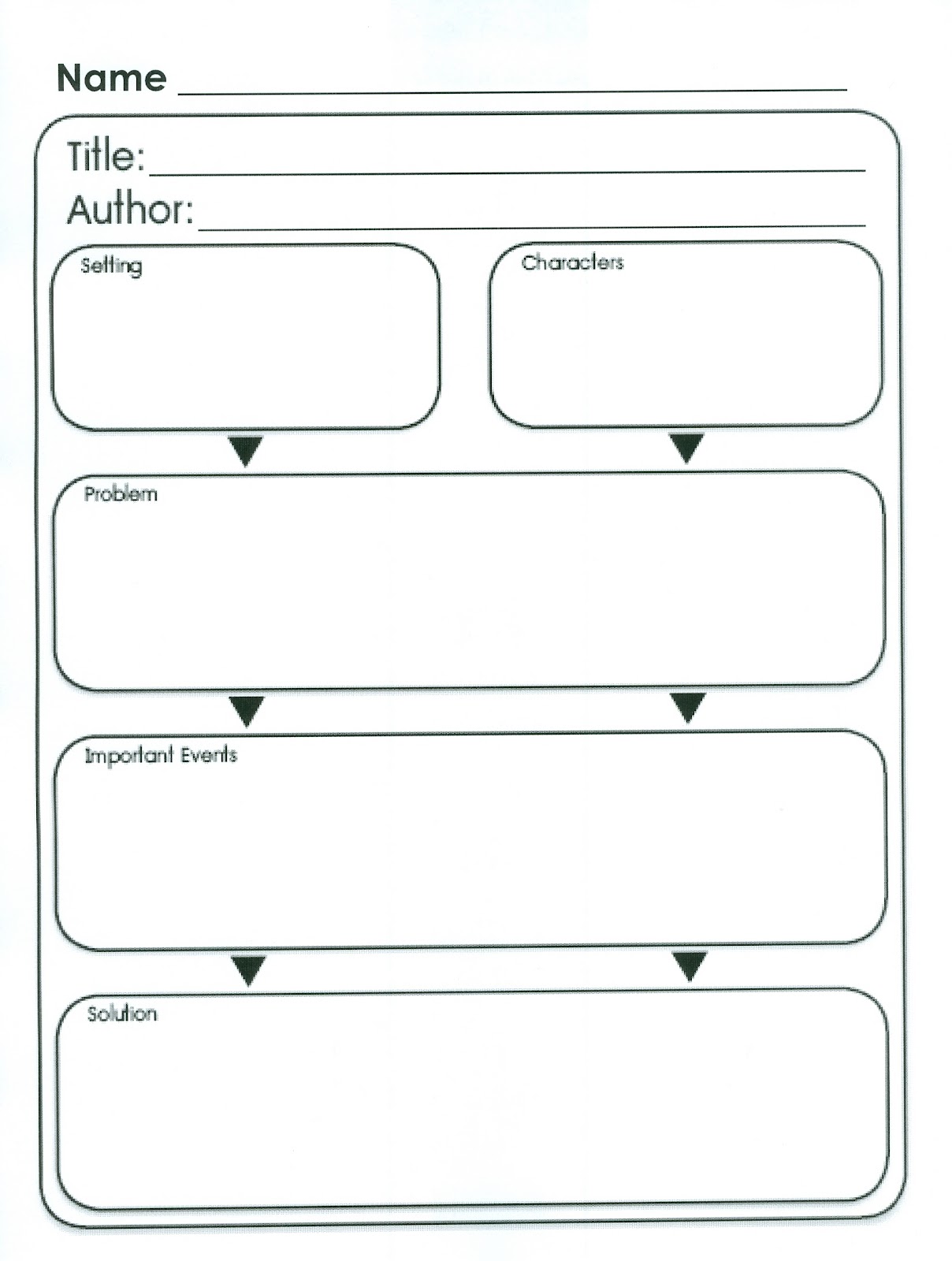
Students in first grade learn about Story Mapping. This is an exercise in breaking down a book into pieces to help with comprehension of the story.  Students learn that a story needs to have a beginning, middle, and an ending. Here are some examples of Story Mapping Worksheets from a first grade class:


Since kids have to think about what they read in this way, I use a similar approach to write picture book manuscripts. I often think of a character first since I love character driven stories so I jot down a few notes on the following things:

     Characters

     Setting

     Problem

     Important Events – Think in 3s. The mc’s first attempt to solve his/her problem doesn’t work and leads to the second attempt which doesn’t work and leads to a third attempt which either solves the problem or creates a new problem. The thing about working in 3s is that they have to make sense together and preferably are connected rather than 3 random ideas that simply don’t work. There are, of course, exceptions to every rule (and this isn’t a rule, just something I have noticed in the hundreds of books I have read).

     Solution


I also like to explain the plot this way: Main Character __________ wants to__________but can’t because __________ so __________.


Chapter Books and Early Mid Grade Novels
Taking the information I gathered in my chapter book and mid grade novel research (posted in a previous blog), I begin writing this way:
Main Character
Age
What makes this MC different?
Problem
Solution

Outline of Chapters:
I plan for 10 chapters but it can be as few as 3 and as many as 50 for a chapter book. I have read that the “sweet spot” for word count is 6,000-10,000 words for chapter books.
At the beginning, you need to show the reader (show don’t tell as often as possible) who is MC is, how old, what the setting is and what the problem or goal is?
After this is shown, let the reader know who or what is getting in the way of the MC solving his/her problem or reaching that goal.
Here come the attempts to solve the problem. Usually, the first and second attempts don’t work because something gets in the way. The first attempt leads to the second attempt which leads to either a new problem or the third attempt.
What is the new problem? Will solving it get the solution to the first problem or create a way that the MC can solve the first problem? If not, then take it out. There is no room for bird walking in picture books or chapter books.
Show how your MC makes a third attempt to solve the problem or reach the goal.
Solving the problem/conflict/reaching the goal now means what? What was the point? What was the point of getting there? Show the reader.
By now, you should be at chapter 10 or near the end of your story .  Wrap it up – Now that the problem is solved, what new problem is created?

Now go write…


Thursday, February 23, 2012

FLAP! Book Trailer


My debut picture book, FLAP!,is coming this June (2012) so I have been taking steps to promote myself as an author/illustrator as well as promote the release of FLAP!. The story takes place on a beautiful autumn day with colorful leaves in the background of many of the illustrations so I filmed a little girl who looks just like my main character running and flapping on top of a mountain in October.

Here it is: